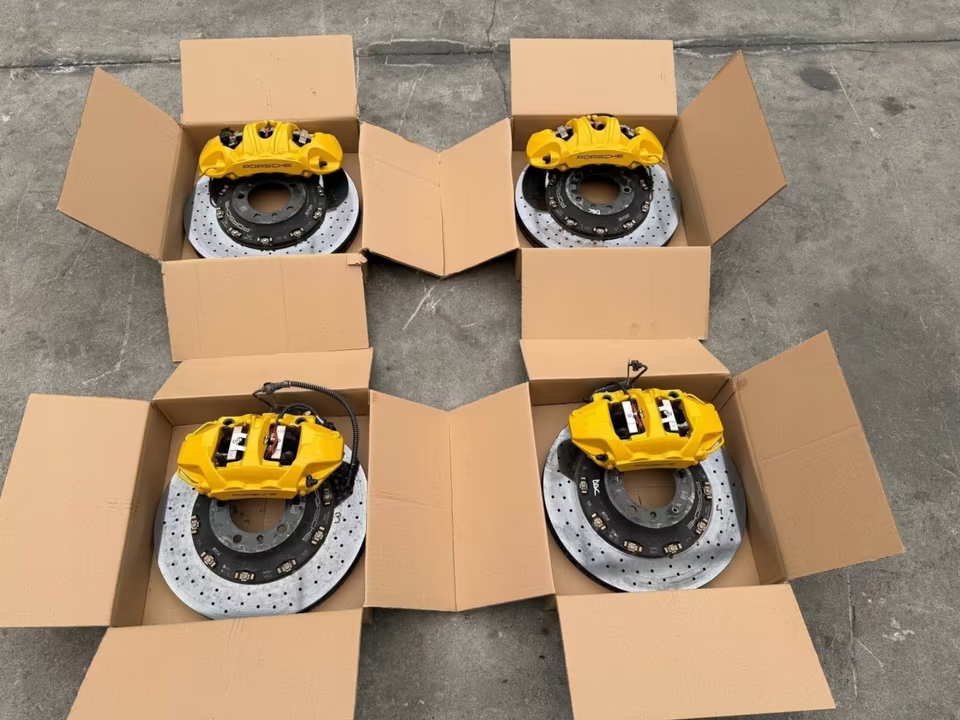
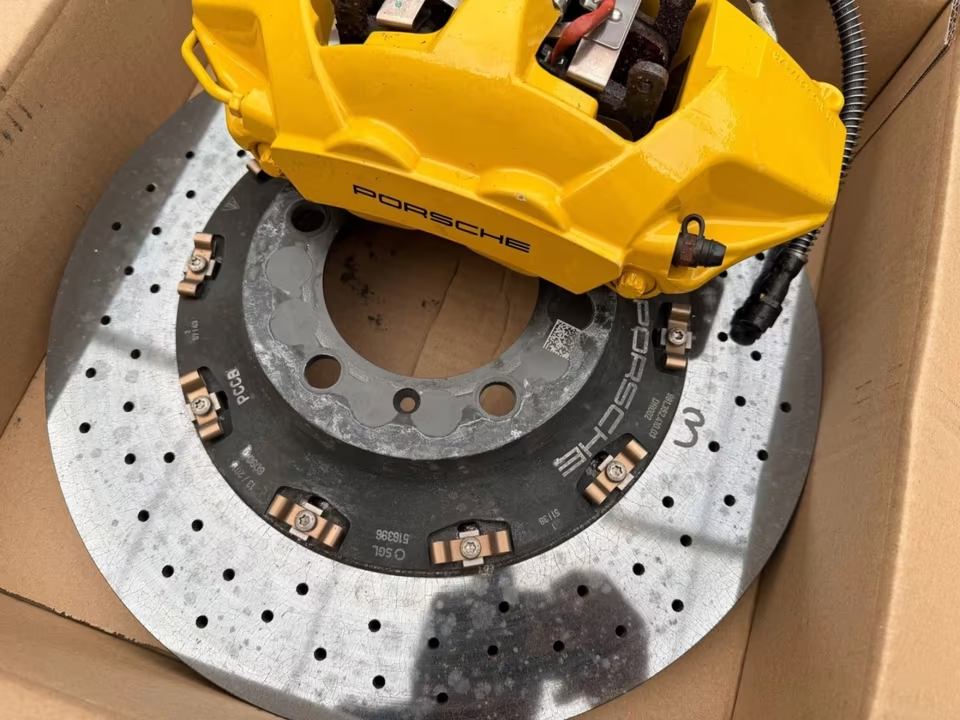
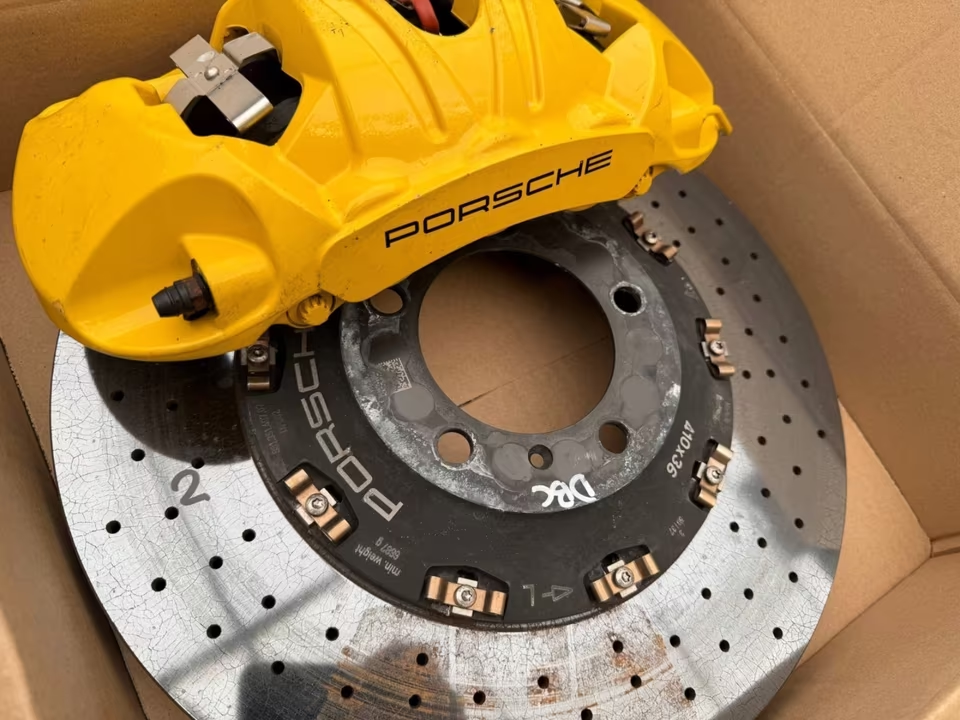
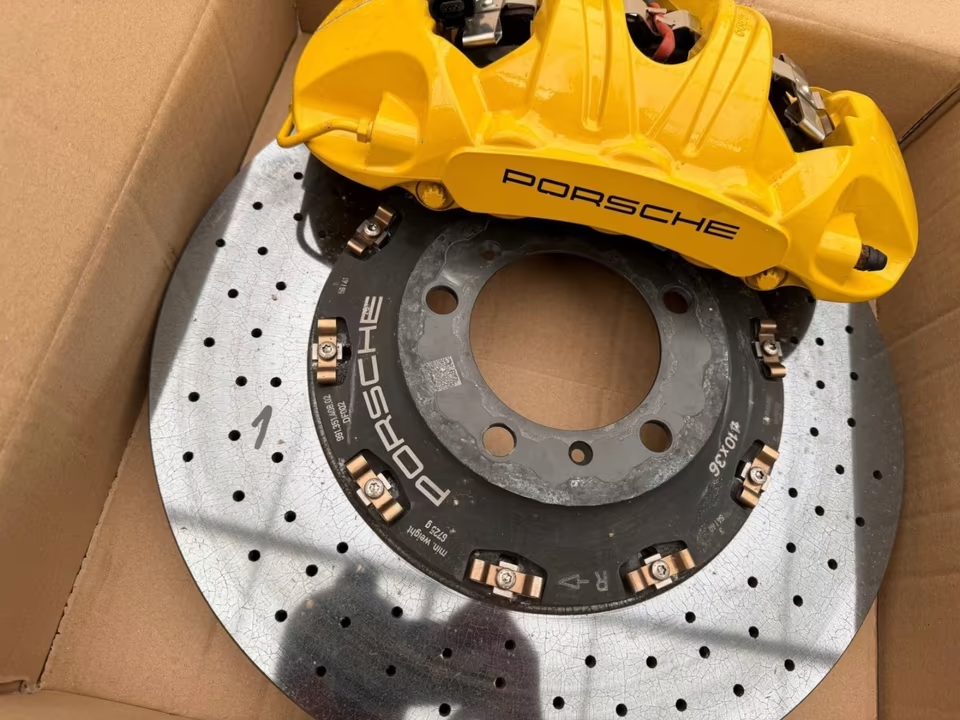
PORSCHE 911 TURBO S 991 CERAMIC BRAKE SYSTEM BRAKE CALIPERS DISC
The Porsche 911 (991) Turbo S Carbon Ceramic Brake (PCCB) system is a benchmark in high-performance braking. While the newer 992 generation moved to a 10-piston front setup, the 991 generation (both 991.1 and 991.2) utilizes a refined 6-piston front architecture that is highly favored for its balance of weight and modularity.
Technical Specifications (991.1 & 991.2)
| Component | Front Axle | Rear Axle |
| Caliper Type | Brembo 6-Piston Monoblock | Brembo 4-Piston Monoblock |
| Rotor Size | $410\text{mm} \times 36\text{mm}$ | $390\text{mm} \times 32\text{mm}$ |
| Material | Carbon Fiber Silicon Carbide (PCCB) | Carbon Fiber Silicon Carbide (PCCB) |
| PCD / Hub | Center Lock (Turbo S Standard) | Center Lock (Turbo S Standard) |
Key Part Numbers for Inventory
For Buy Mustang parts Ltd, it is critical to note that the 991 Turbo S comes standard with Center Lock hubs. If you are selling these to a standard Carrera owner for a retrofit, they must have the Center Lock conversion or you must verify 5-lug compatibility (which is rare for Turbo S spec rotors).
-
Front Ceramic Discs
-
Left:
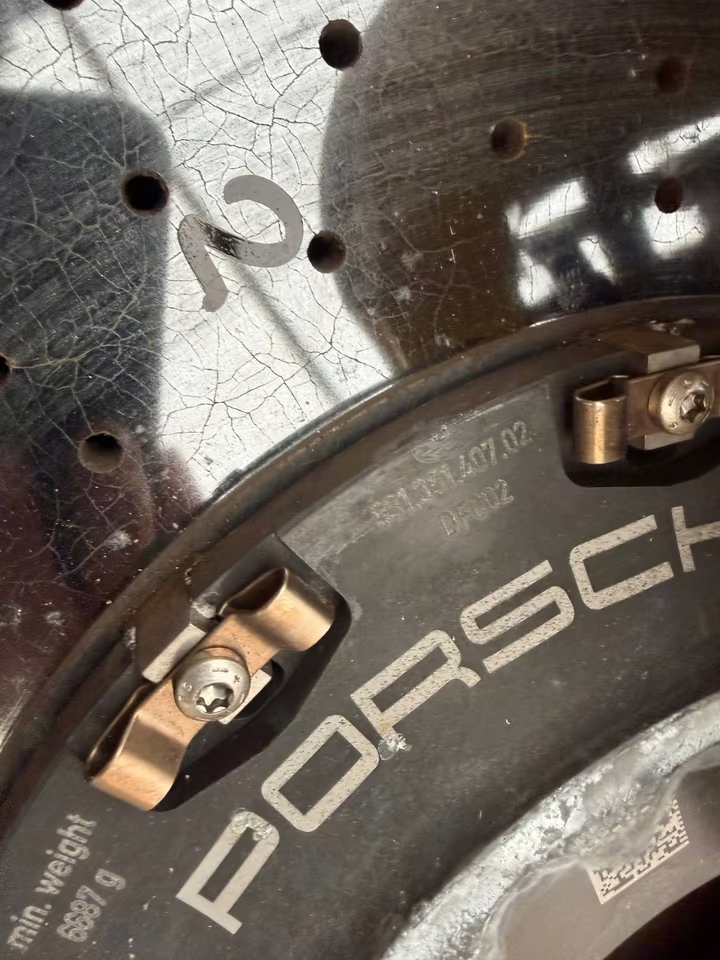
991.351.407.07(or revision85) -
Right:
991.351.408.07(or revision85)
-
-
Rear Ceramic Discs ($390\text{mm}$):
-
Left:
991.352.409.04 -
Right:
991.352.410.04
-
-
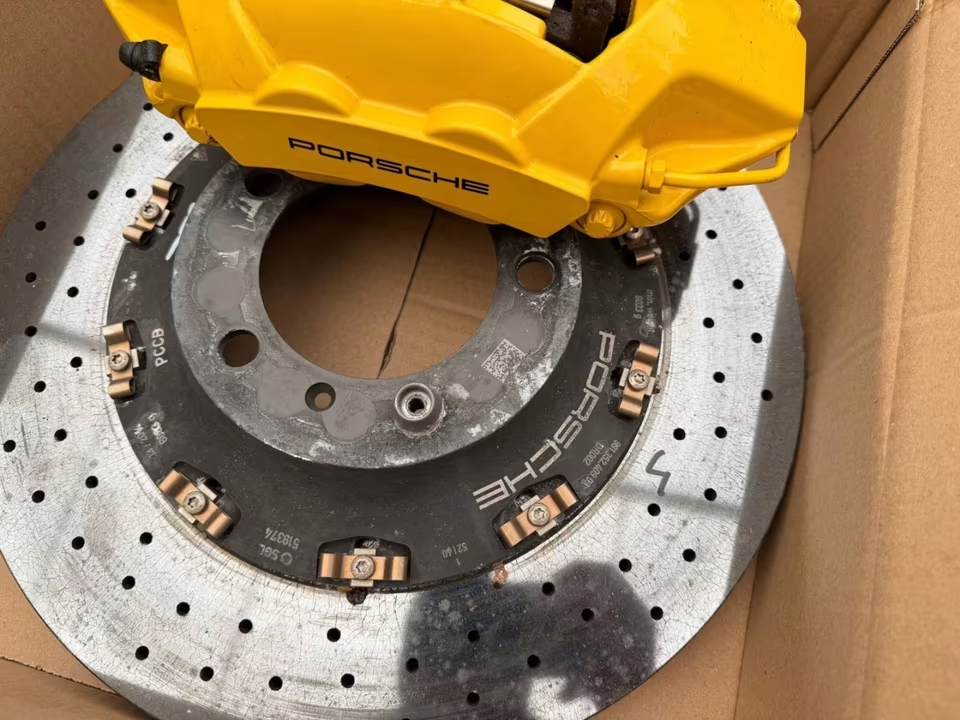
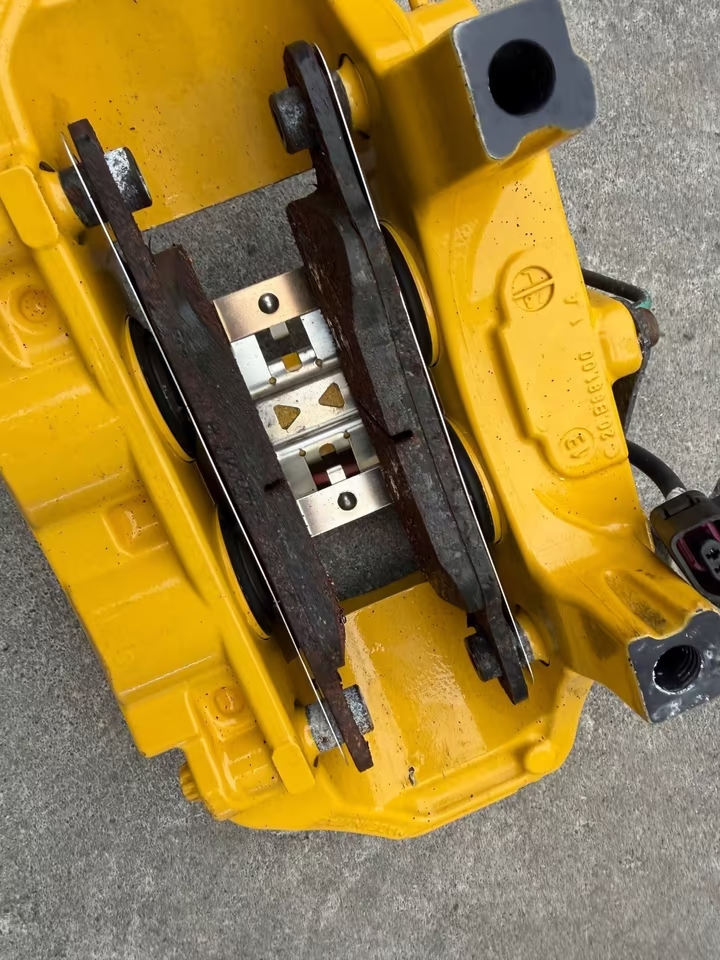
Calipers: Finished in Racing Yellow with the “Porsche” script.
Market Intelligence & Sales Strategy
1. The 991.1 vs. 991.2 Difference
The rotors and calipers are largely interchangeable between the 991.1 and 991.2 Turbo S. However, the 991.2 featured updated cooling ducts. If you have a complete set, including the spoilers/air guides, they add significant value to a 991.1 owner looking to upgrade their cooling capacity.
2. The “Iron Conversion” Opportunity
Many 991 Turbo S owners who track their cars swap these ceramics out for 410mm Iron units (like those from Hinz Motorsport or PFC) to preserve the expensive PCCBs. If you are sourcing “New” or “Take-off” units, these are often the most pristine parts on the market because they were removed early in the car’s life.
3. Inspection Protocol (Critical)
-
The Weight Test: Since you deal with luxury inventory, always provide the actual weight in grams. Each rotor has a “Minimum Weight” stamped on the hat. If the rotor is within $20\text{g}$ to $30\text{g}$ of that limit, its value drops significantly as it nears the end of its thermal life.
-
Surface Integrity: Look for “delamination” or a dark, charred appearance on the disc edges. A healthy PCCB should have a consistent, slightly glossy, “mirrored” grey finish.
Reviews
There are no reviews yet.