
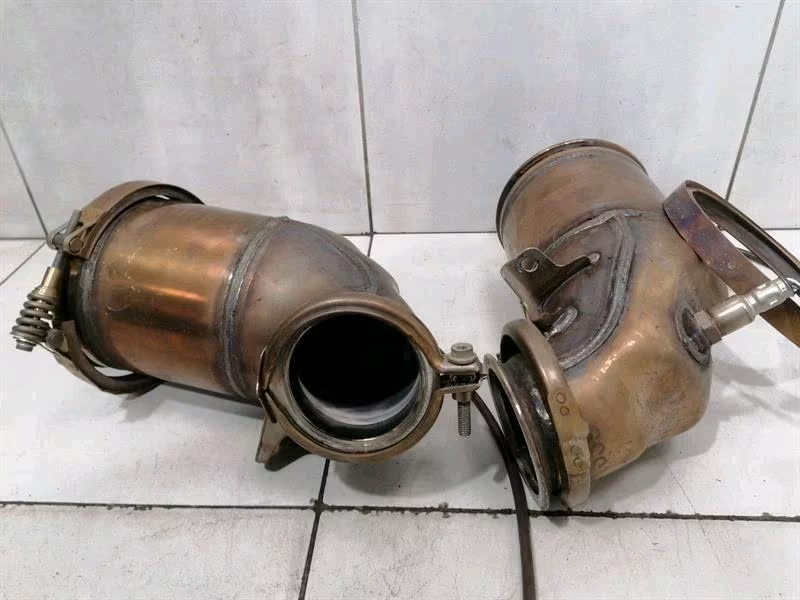
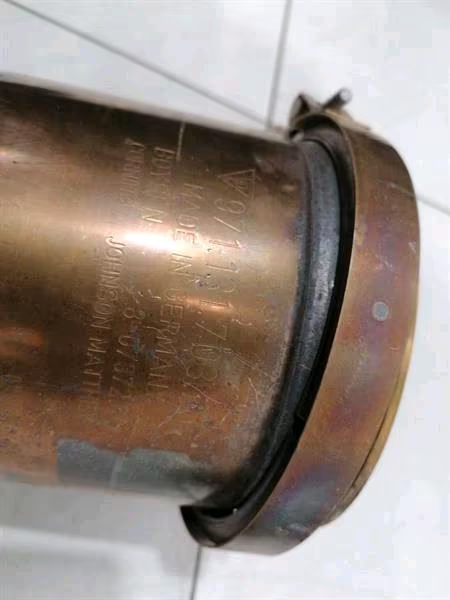
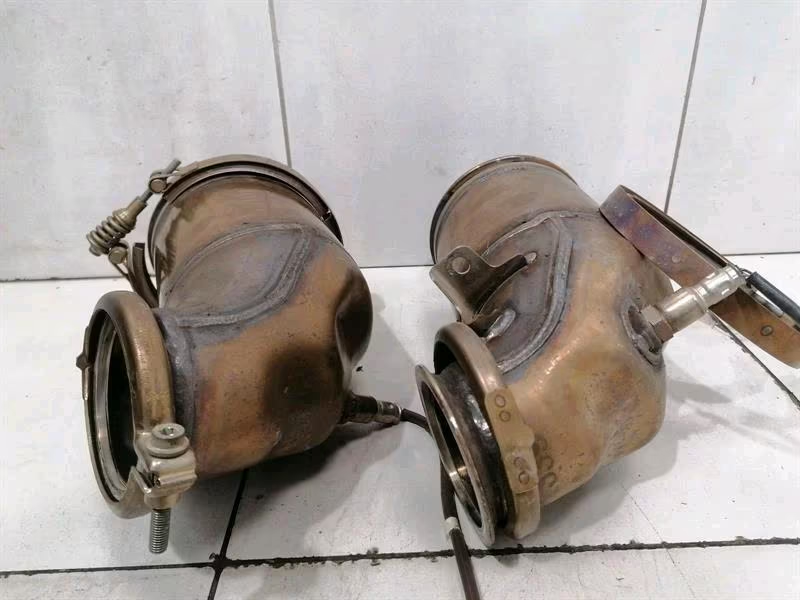
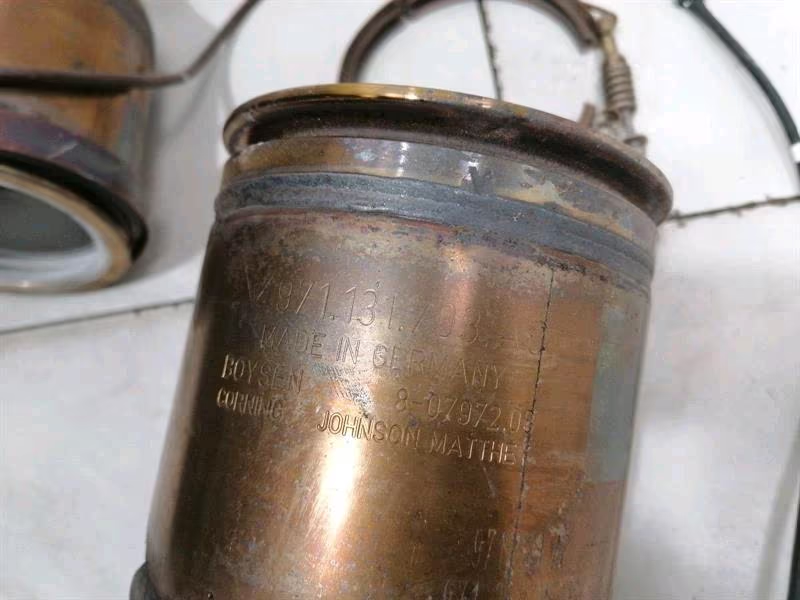
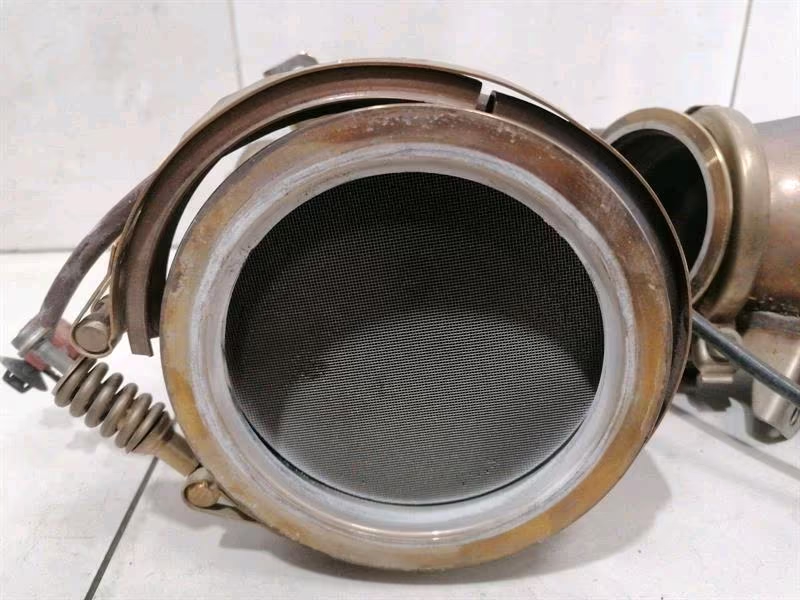
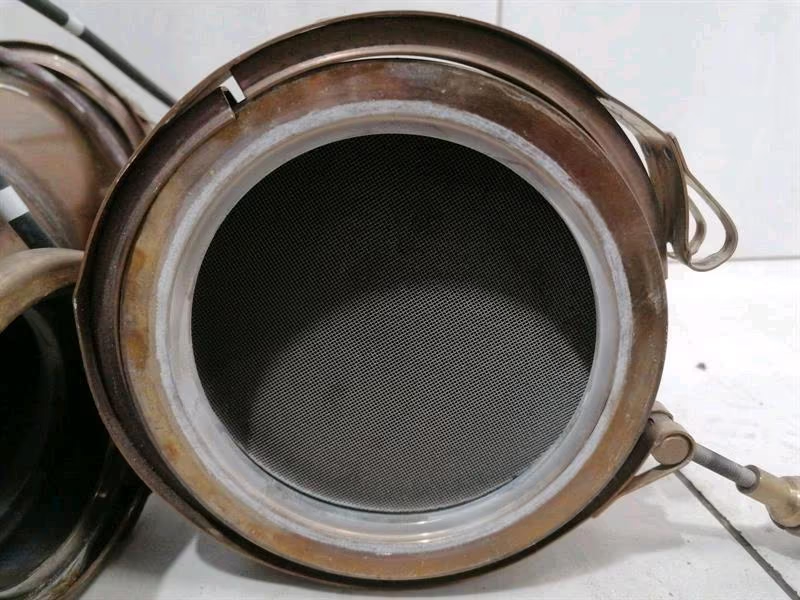
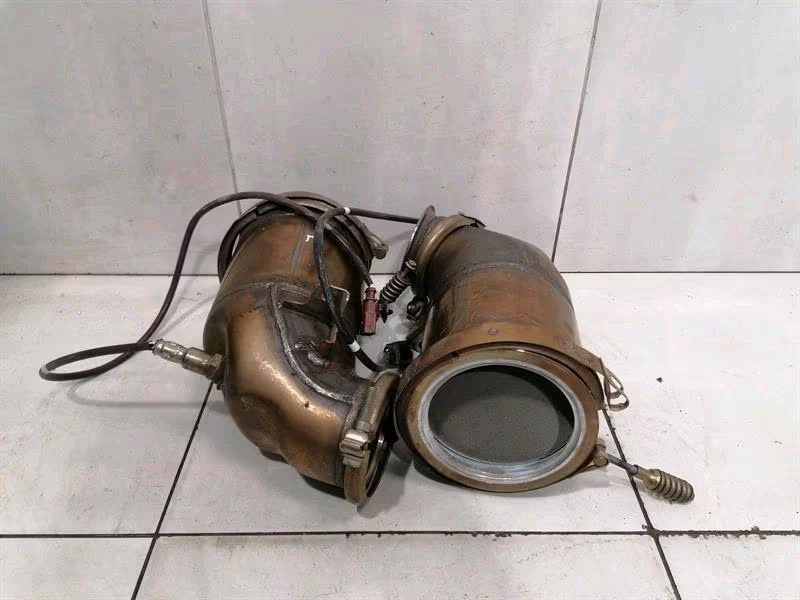
BENTLEY CONTINENTAL 4.0 GT GTC 18-24 3S 3SD KAT Catalytic Converter
Genuine Bentley Continental GT / GTC 4.0 V8 Catalytic Converter
Series: 3S / 3SD (Third Generation: 2018–2024+)
For the Third Generation Bentley Continental GT/GTC, the catalytic converter system is significantly more integrated than in previous generations. Because the 4.0L Twin-Turbo V8 (shared with the Porsche Panamera and Audi RS6 platforms) uses a “Hot V” configuration—where the turbochargers sit inside the “V” of the engine—the primary catalytic converters are located immediately downstream of the turbos at the top-rear of the engine bay.
Primary Catalytic Converter Part Numbers
The parts for the 3S chassis often carry 971 prefixes, reflecting the shared architecture with the Porsche Panamera (971).
Note: Suffixes (like AC, D, or E) change based on regional emission standards (Euro 6d vs. US EPA) and the presence of an OPF (Otto Particulate Filter).
Technical Design: “Hot V” Layout
Unlike older Bentleys where the cats were located under the car, the 3S V8 converters are manifold-close.
-
Thermal Management: Because they sit so close to the turbochargers and the firewall, these units are wrapped in a specialized multi-layer heat shield (often a dimpled silver foil).
-
Sensor Integration: Each converter typically houses two oxygen (Lambda) sensors: one Upstream (pre-cat) to monitor fuel trim and one Downstream (post-cat) to monitor catalyst efficiency.
-
Downpipes: In high-performance tuning (like Fi Exhaust or Akrapovič), these are the components replaced by “Sport Cats” or “Downpipes” to increase exhaust flow and sound.
Common Reasons for Replacement
-
Turbocharger Failure: If a turbo seal fails, oil can be dumped directly into the catalytic converter, “poisoning” the precious metal core and causing a permanent P0420/P0430 efficiency code.
-
Thermal Fatigue: The extreme heat in the “Hot V” can eventually cause the ceramic internal honeycomb to crack or “melt” (substrate meltdown), leading to an exhaust restriction and loss of power.
-
OPF Clogging: On European-spec models (2019+), the integrated particulate filter can become restricted if the car is only driven for short city trips, requiring a forced regeneration or replacement.
Installation Requirement
Software Calibration: After replacing a catalytic converter on the
3Splatform, the Engine Control Unit (ECU) must be notified via a diagnostic tool (like ODIS). The “Learned Values” for the Oxygen Sensors must be reset to ensure the car doesn’t continue to compensate for the old, inefficient catalyst.
Reviews
There are no reviews yet.