
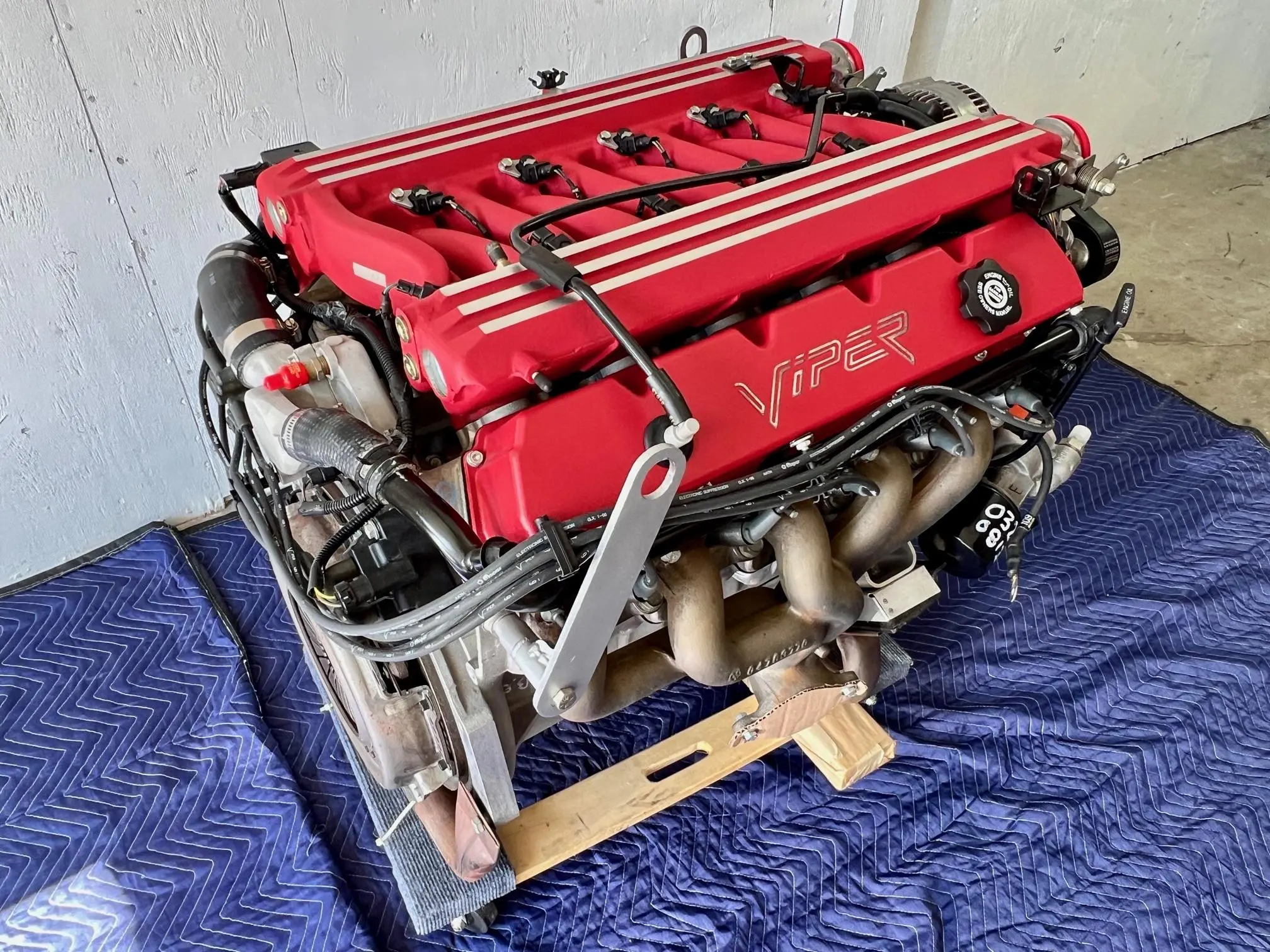
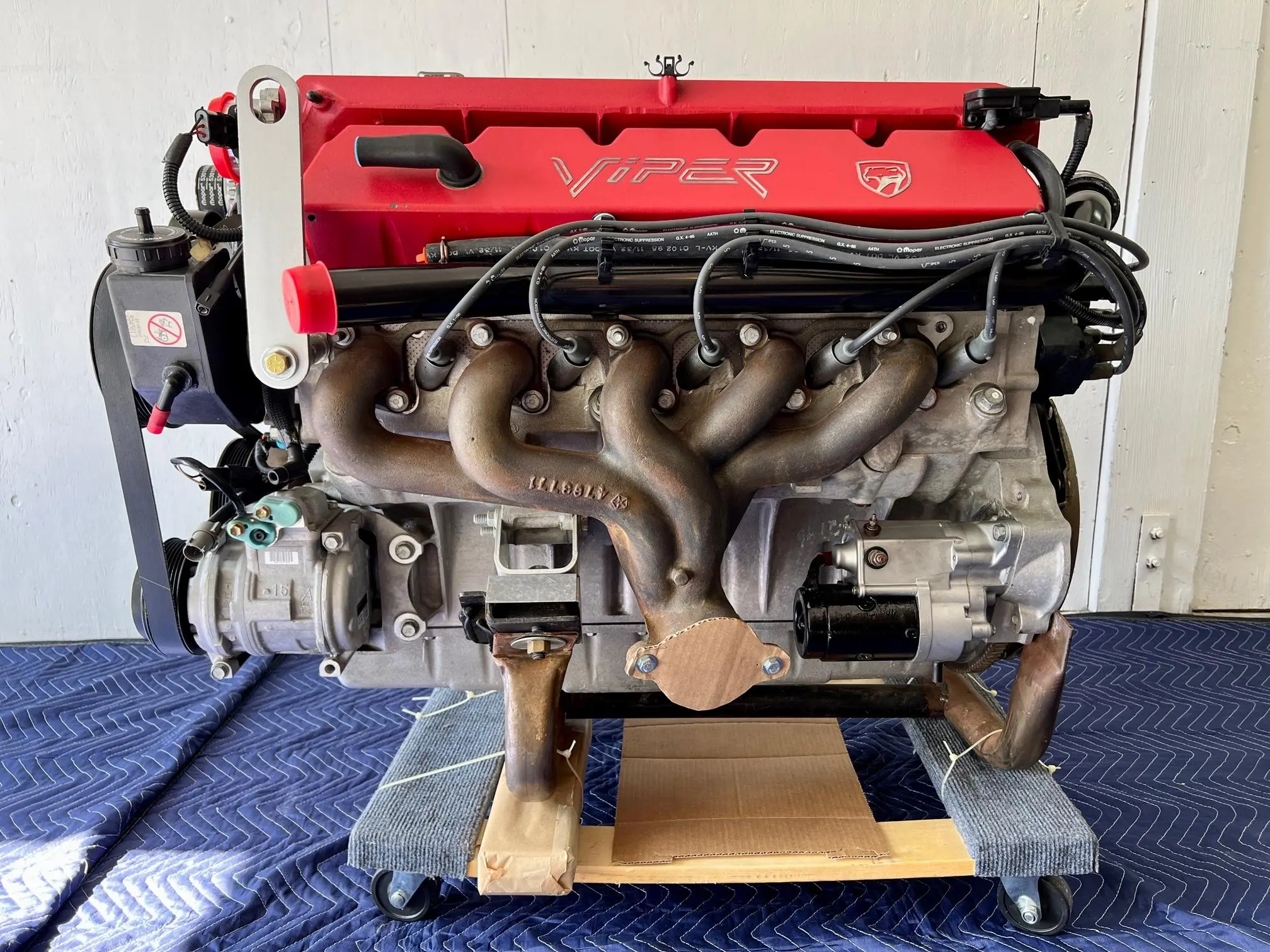
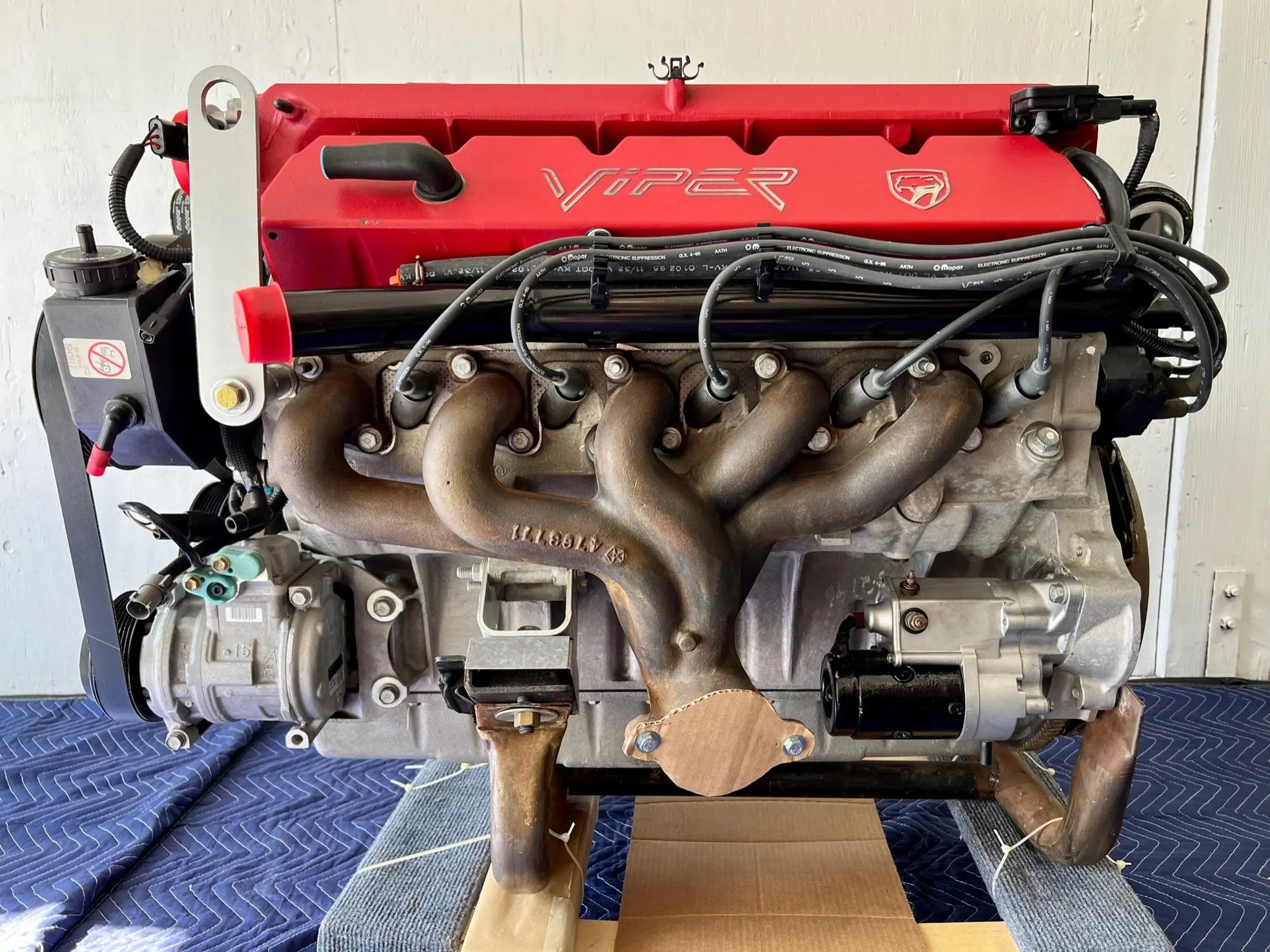
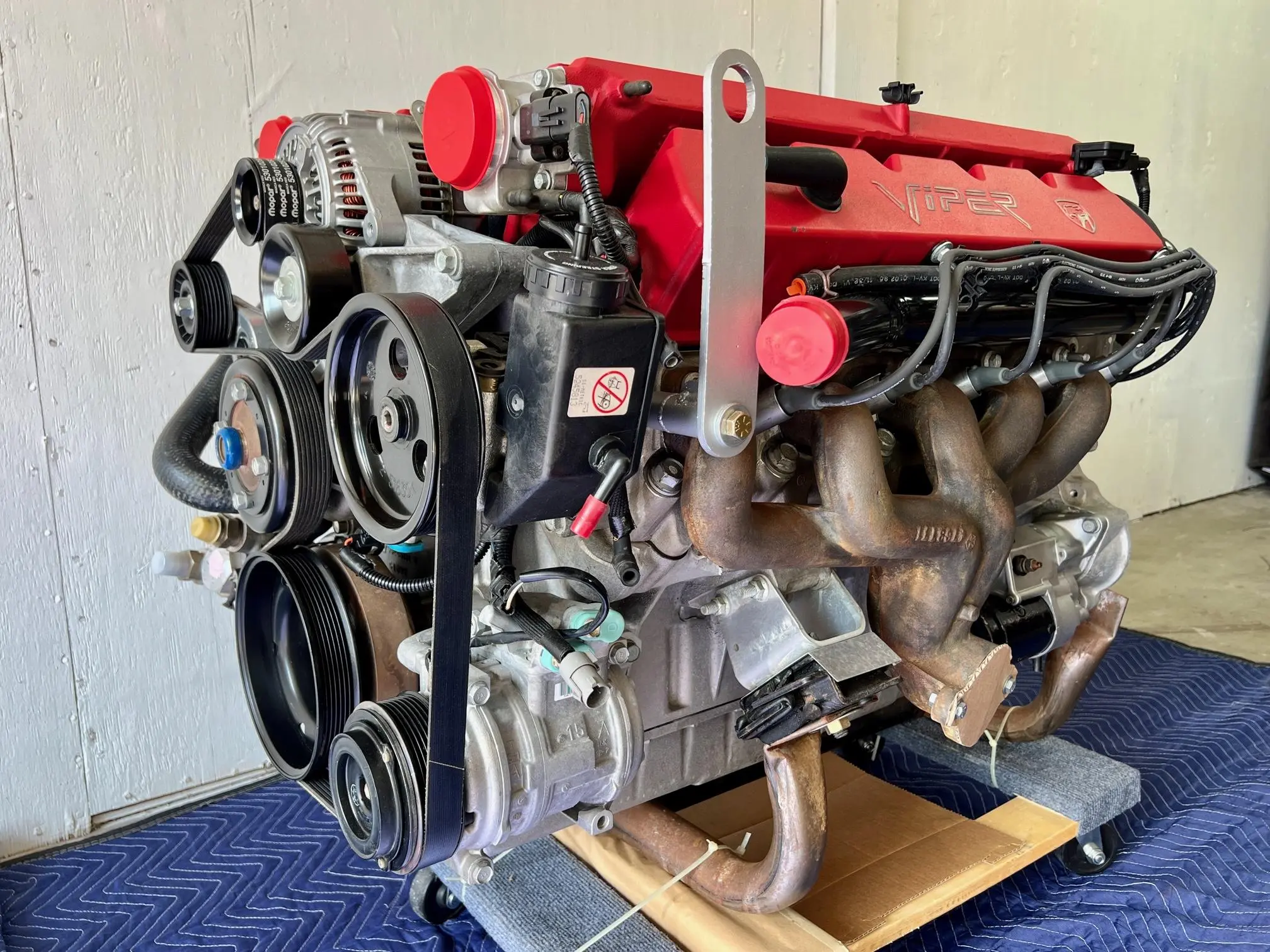
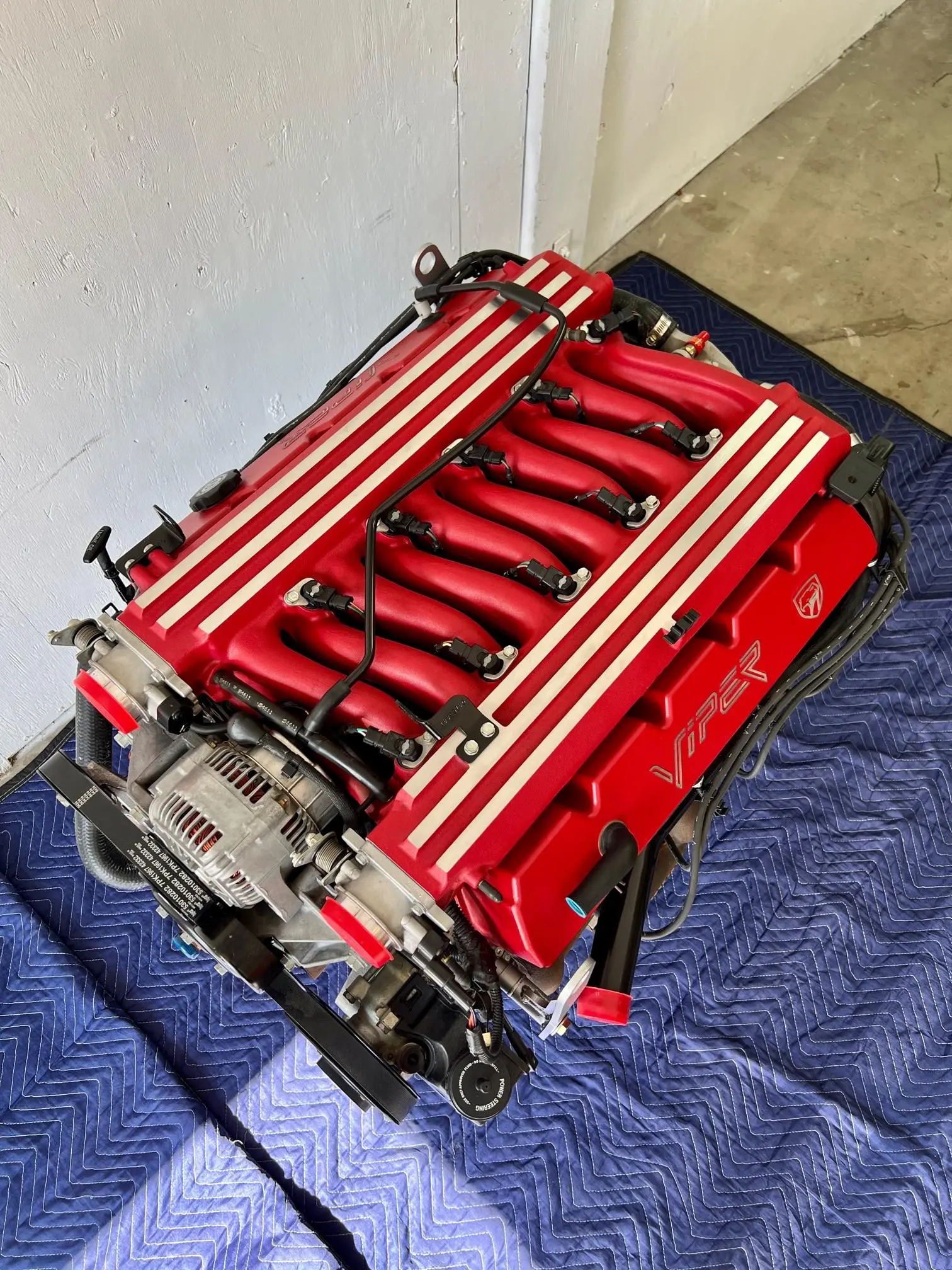
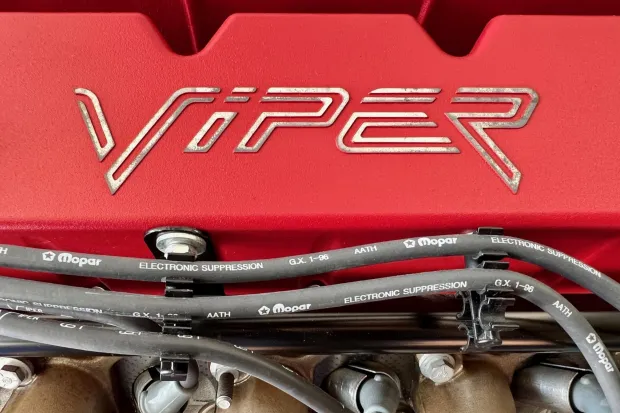
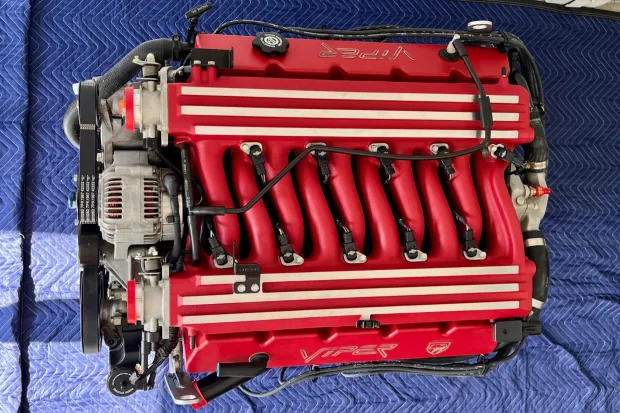
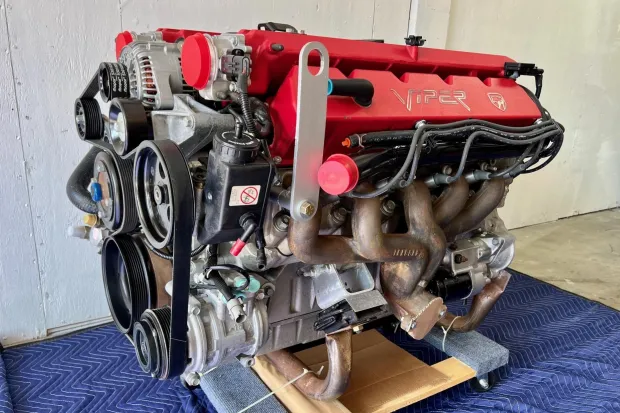
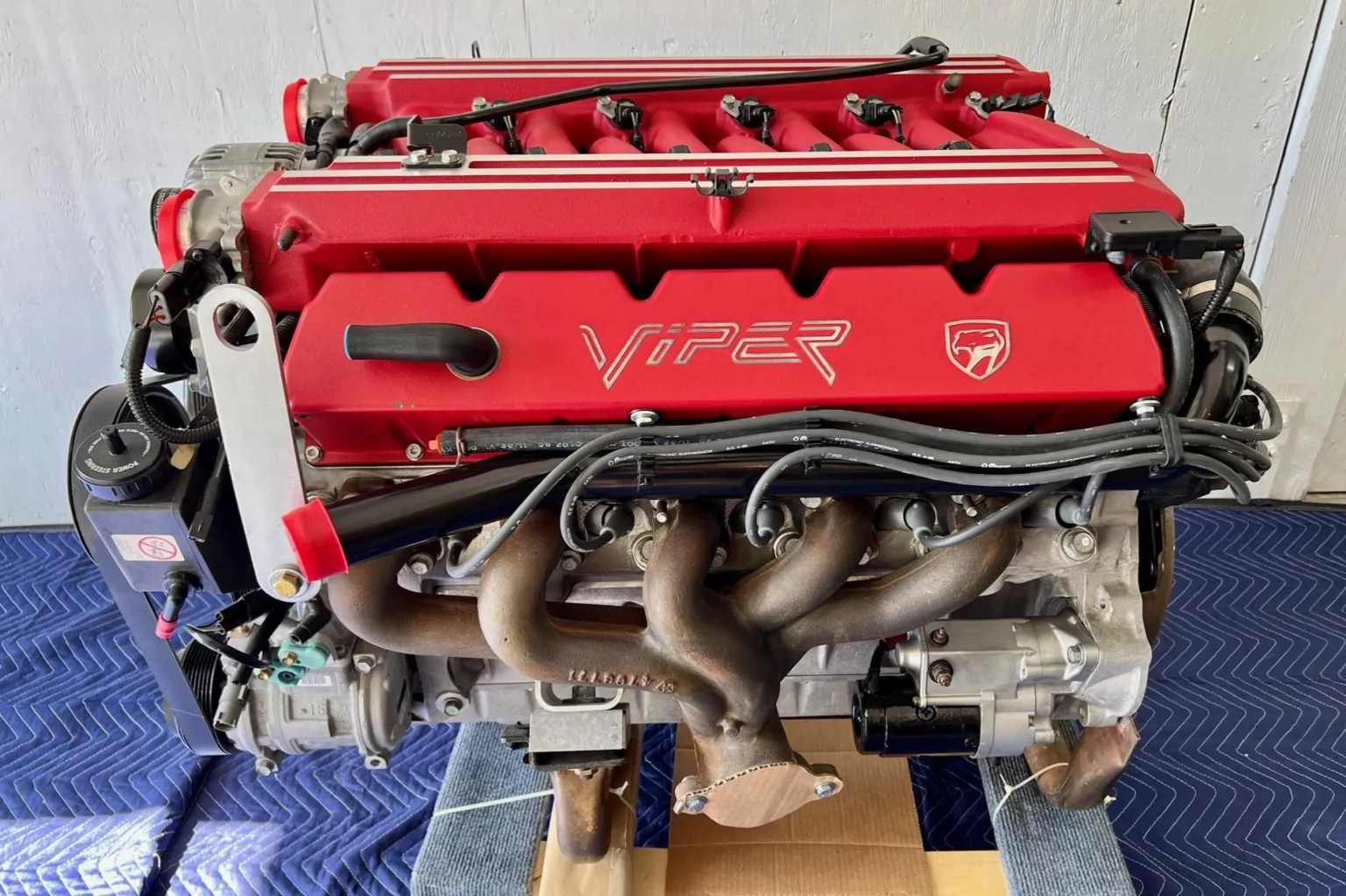
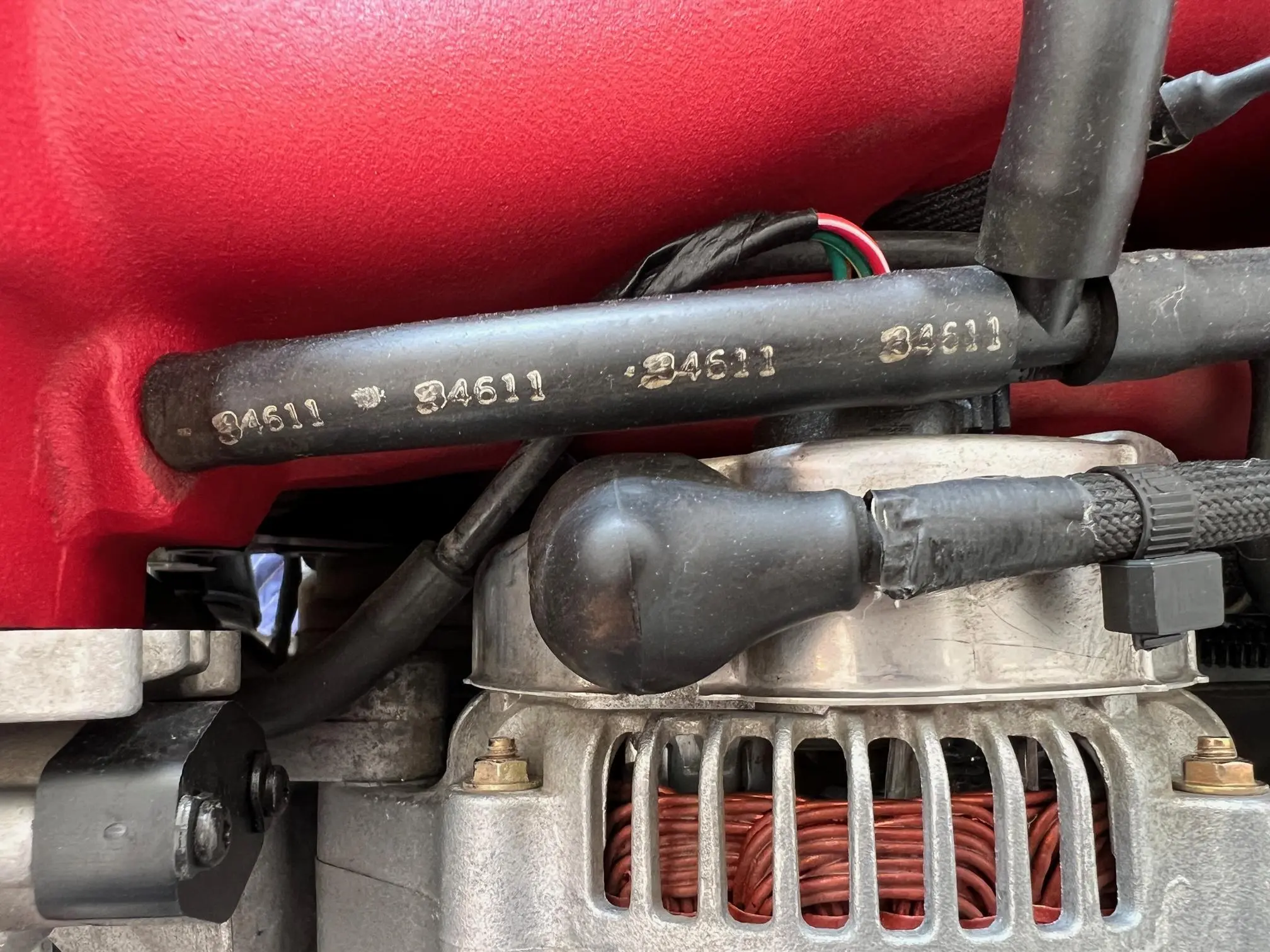
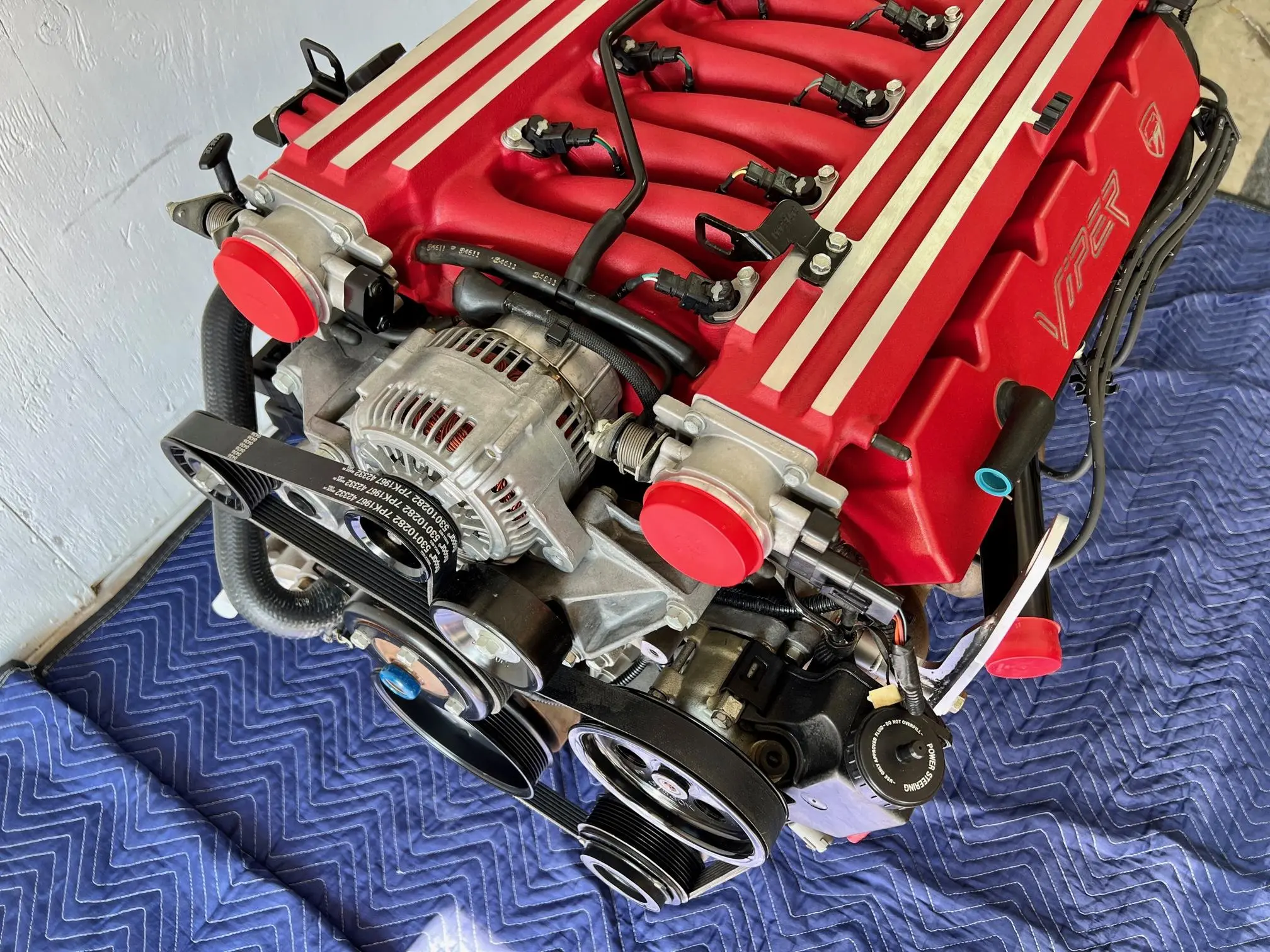
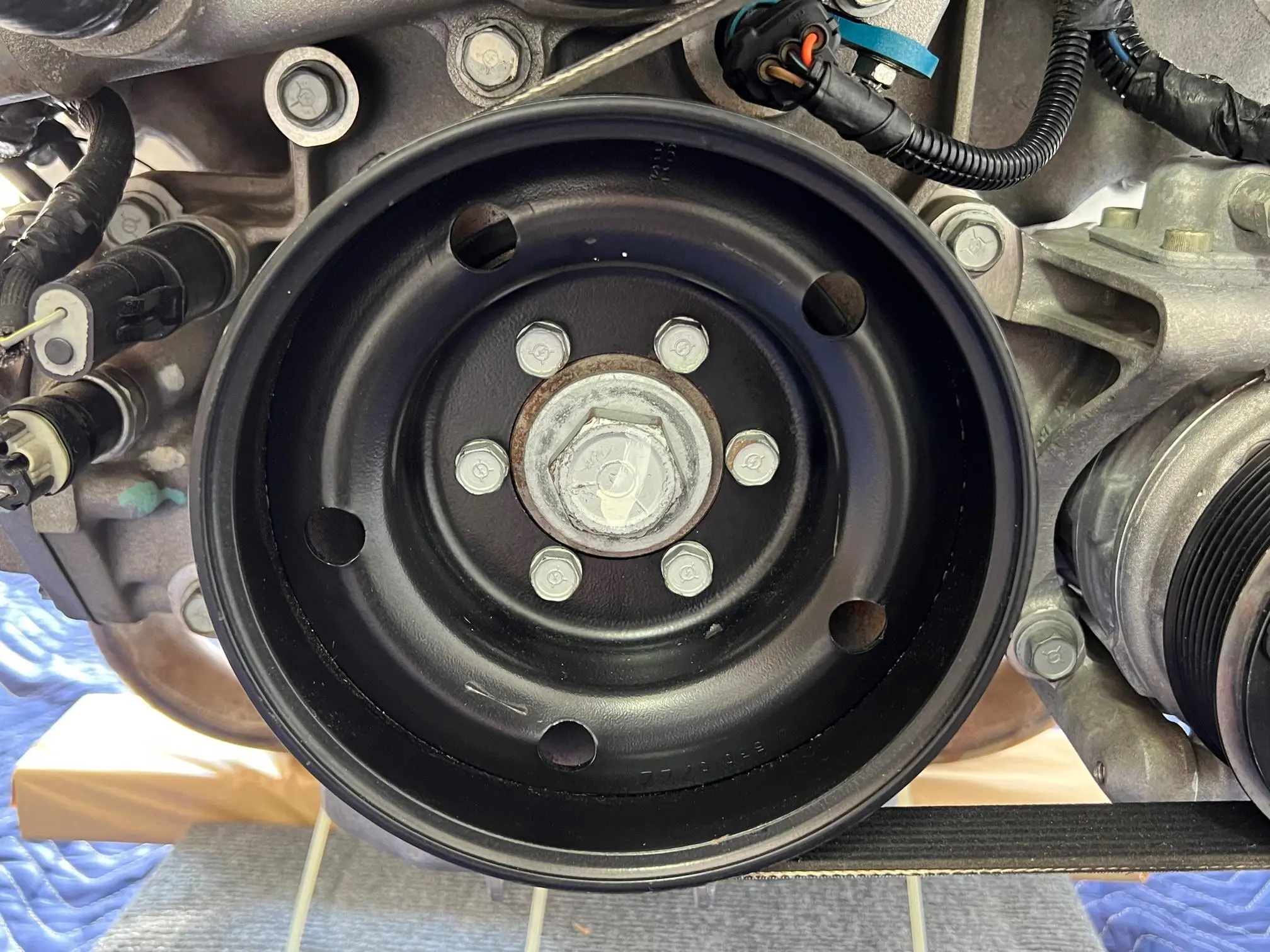
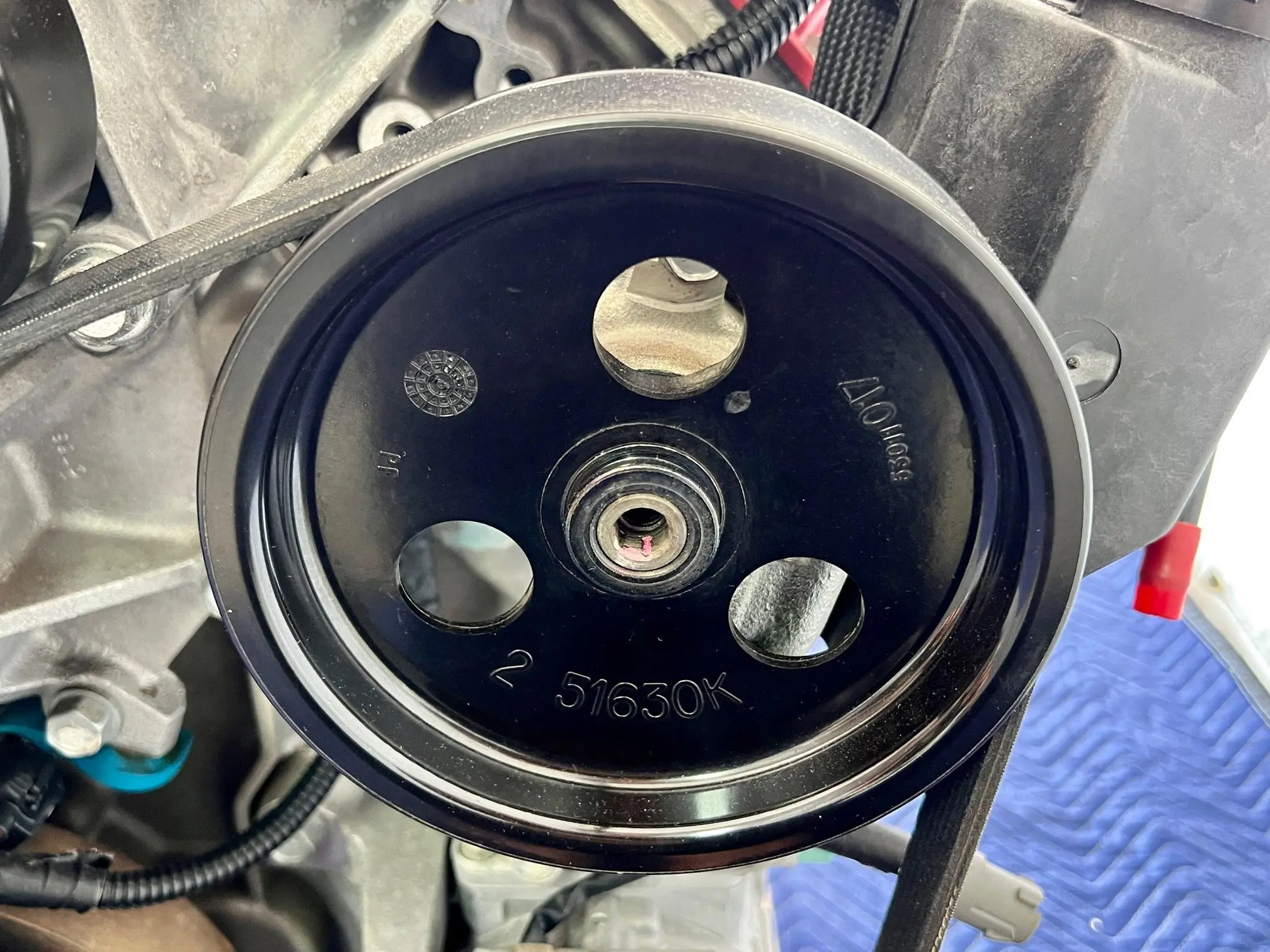
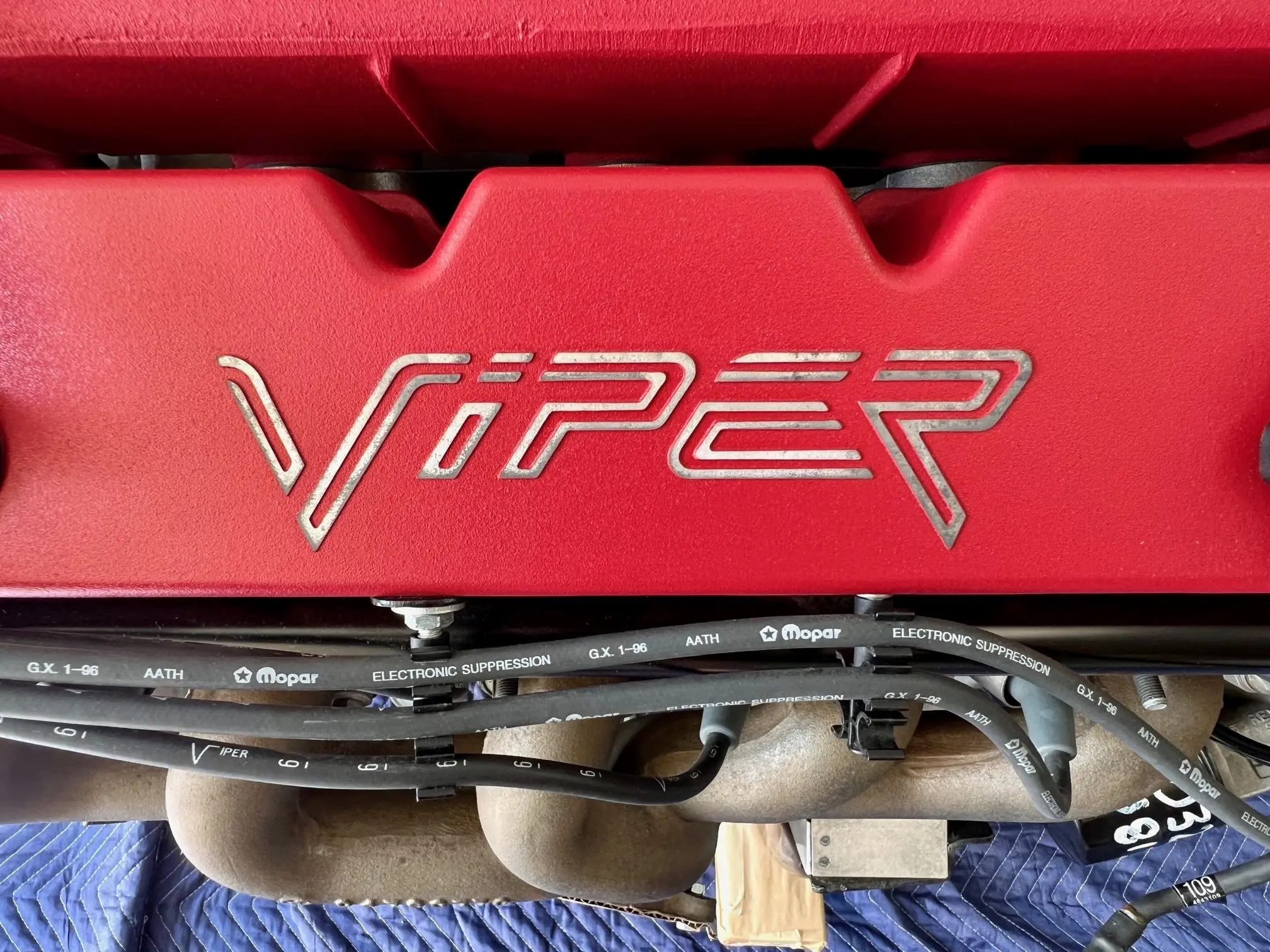
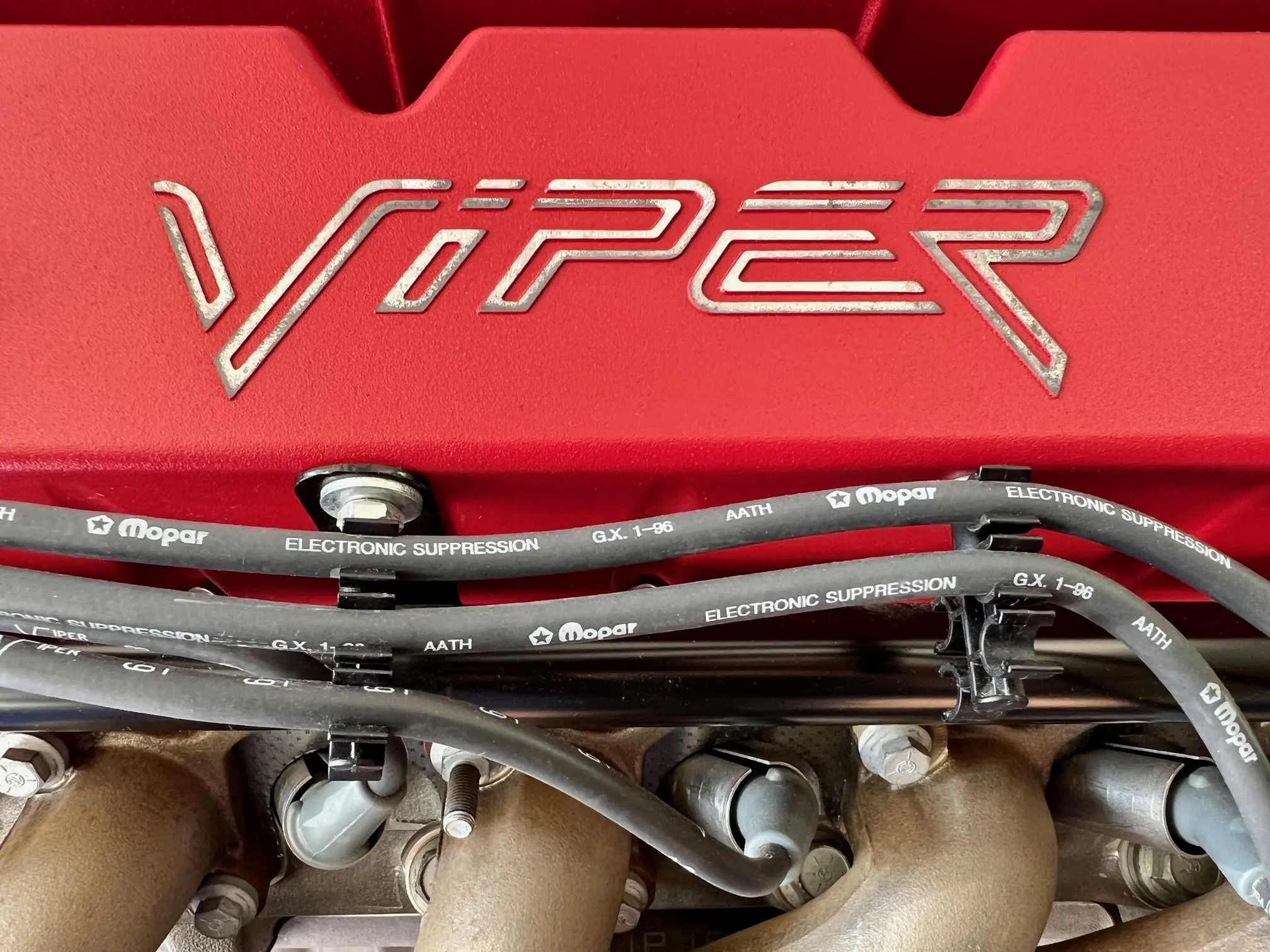
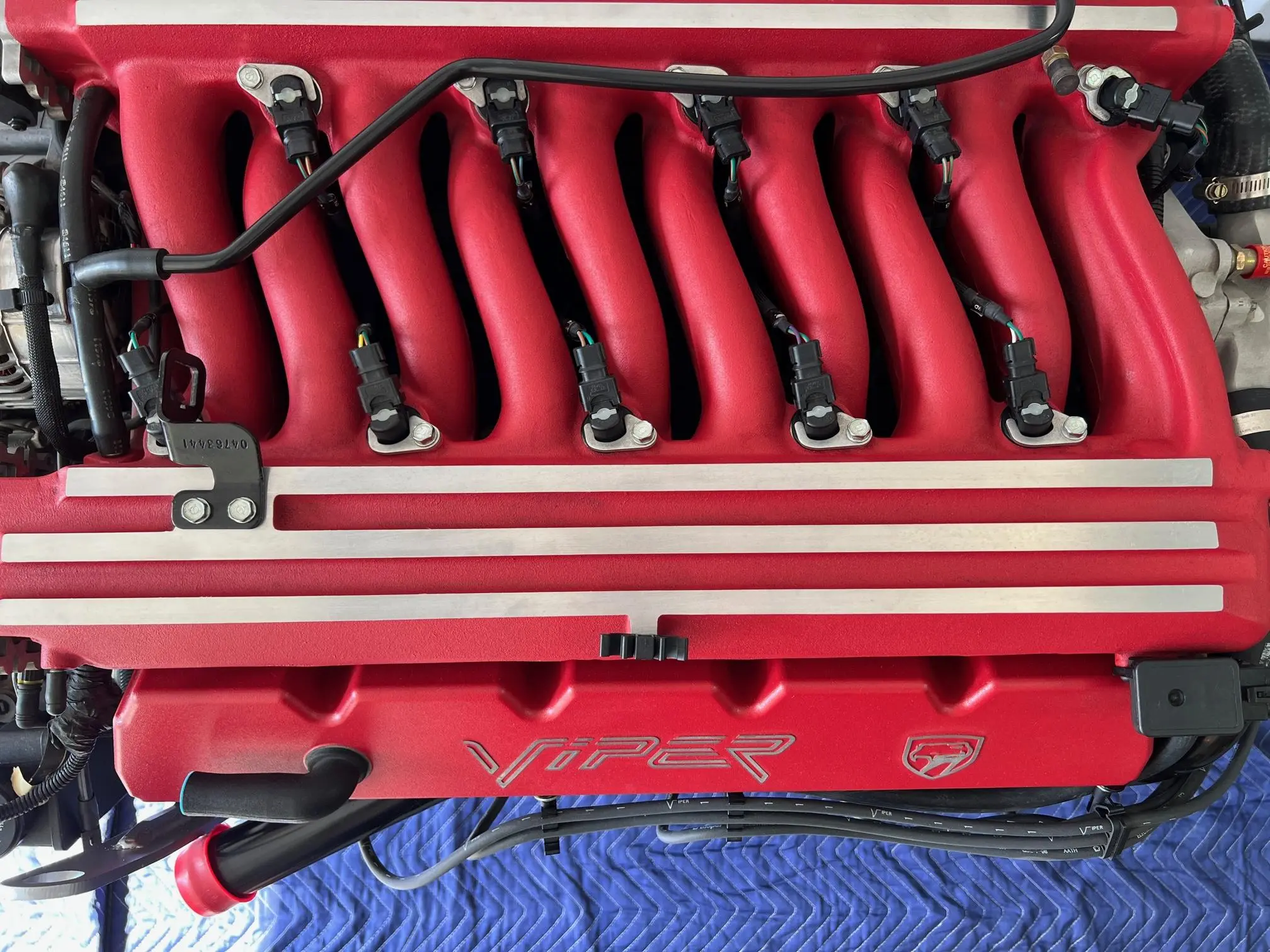
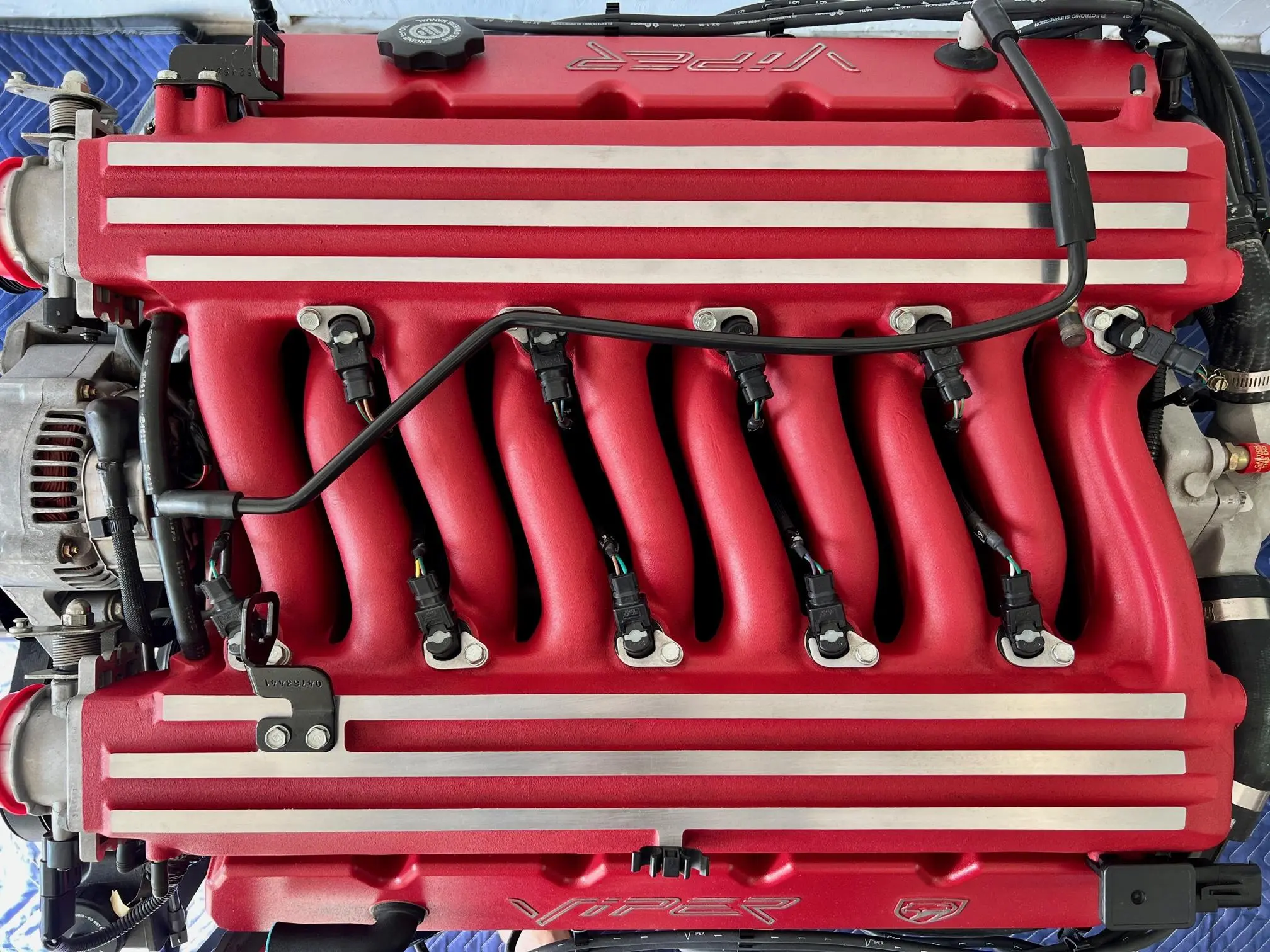
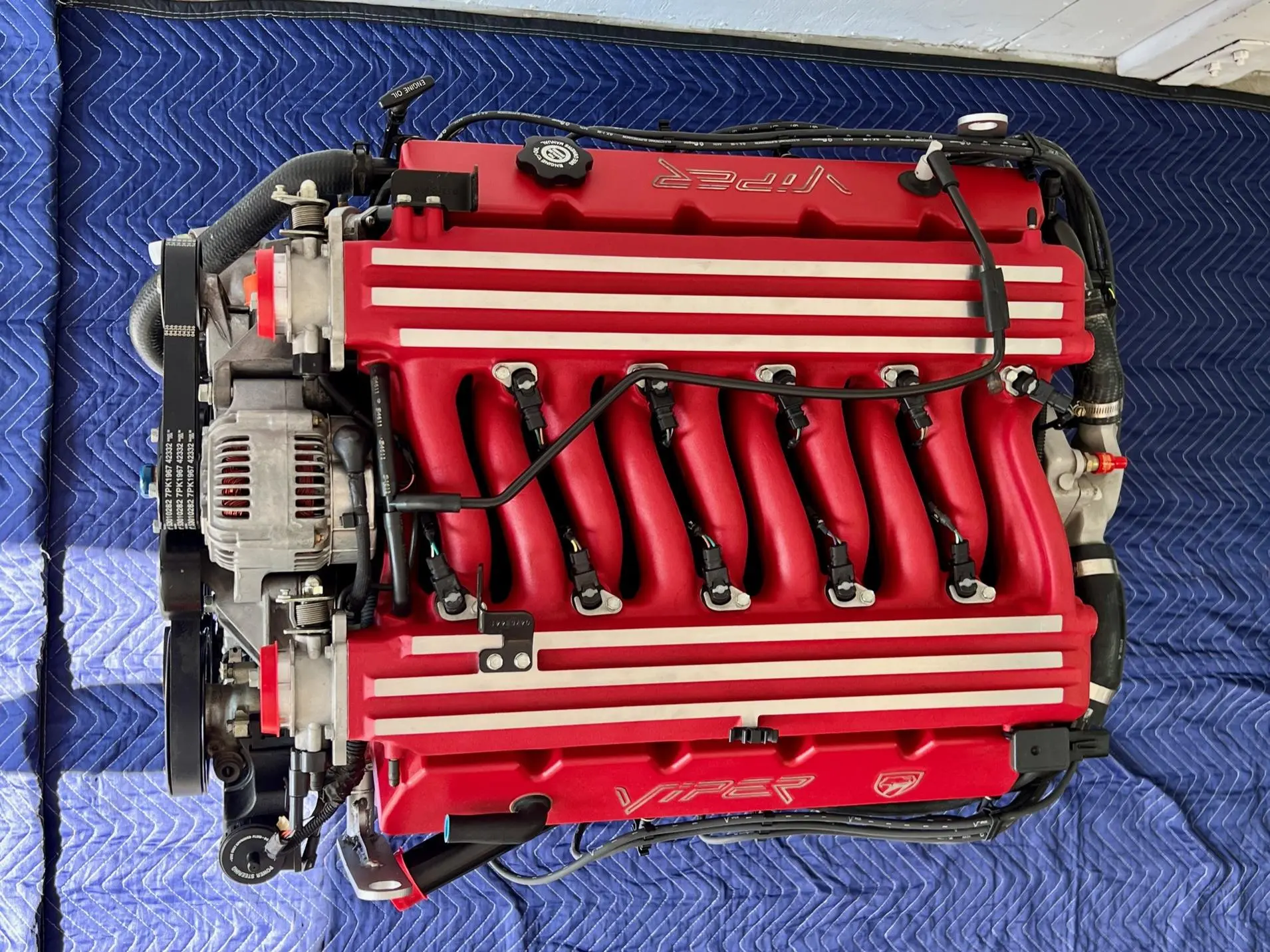
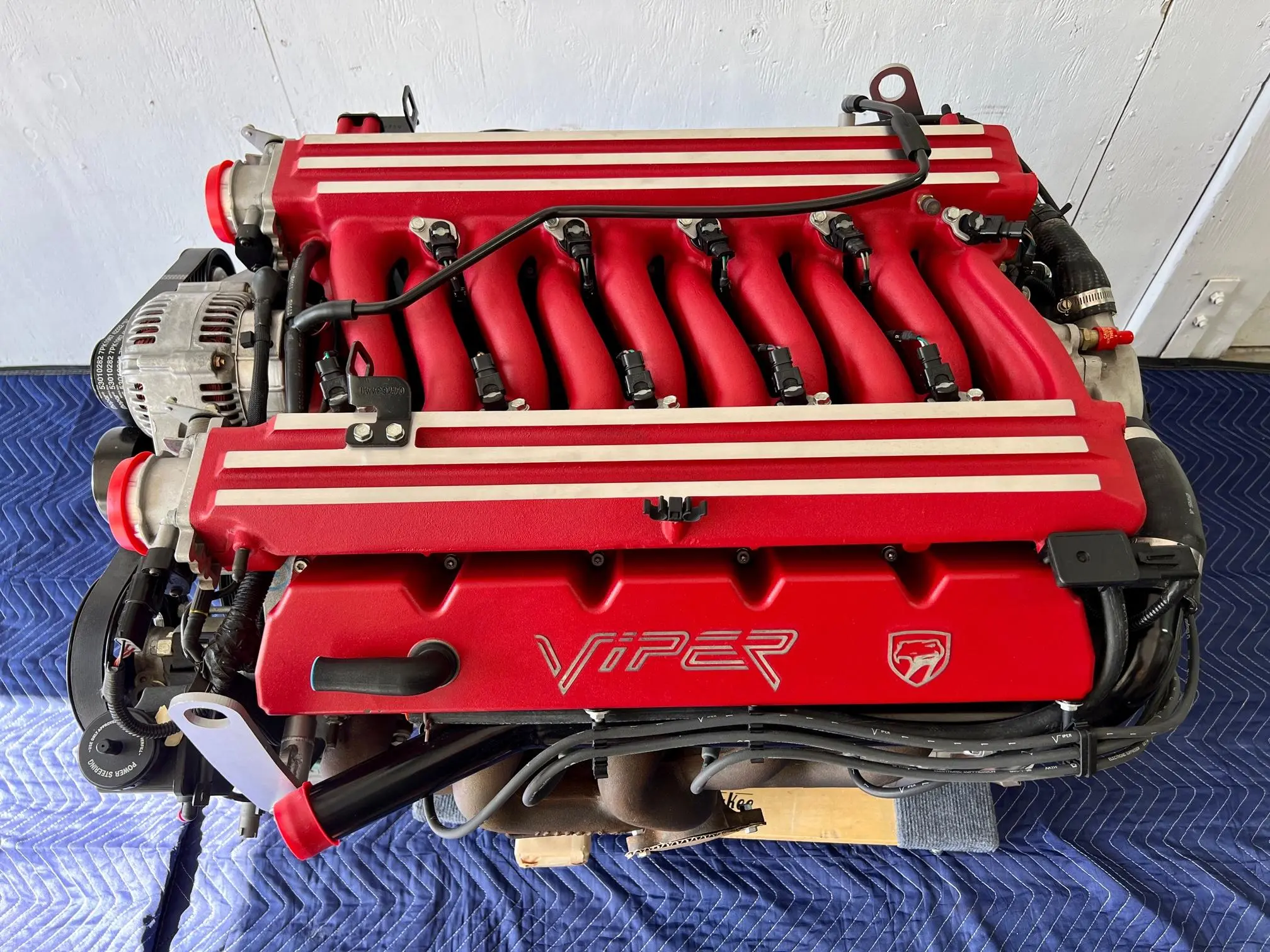
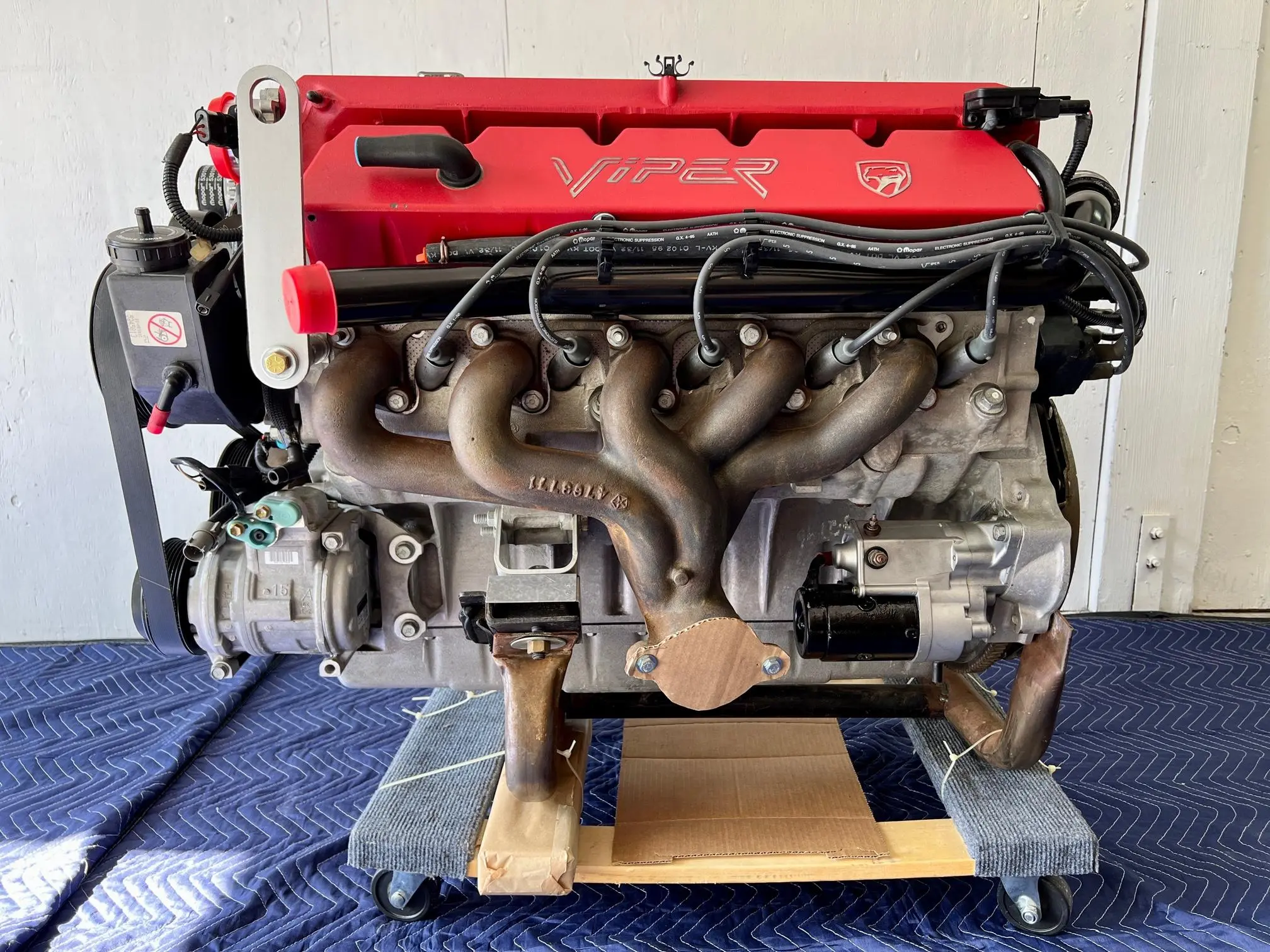
Dodge Viper RT/10 8.0L V10 Engine
8.0L V10 engine in the Dodge Viper RT/10 is one of the most iconic powerplants in American automotive history. Conceived as a modern-day successor to the Shelby Cobra, the engine was designed to deliver massive low-end torque and raw, unadulterated power.
Listing Details
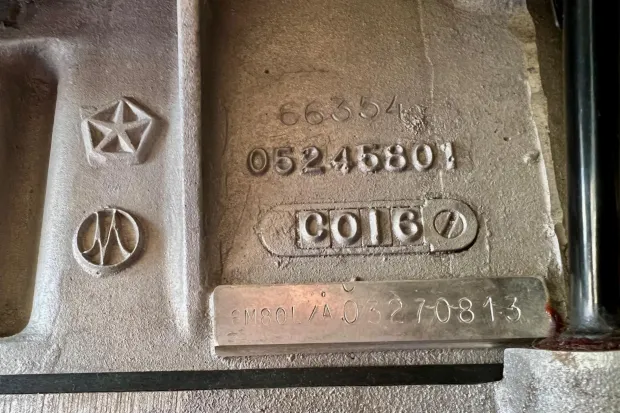
- Part Number: 05245801
- Serial Number: 6M80L/A03270813
- 8.0-Liter OHV V10
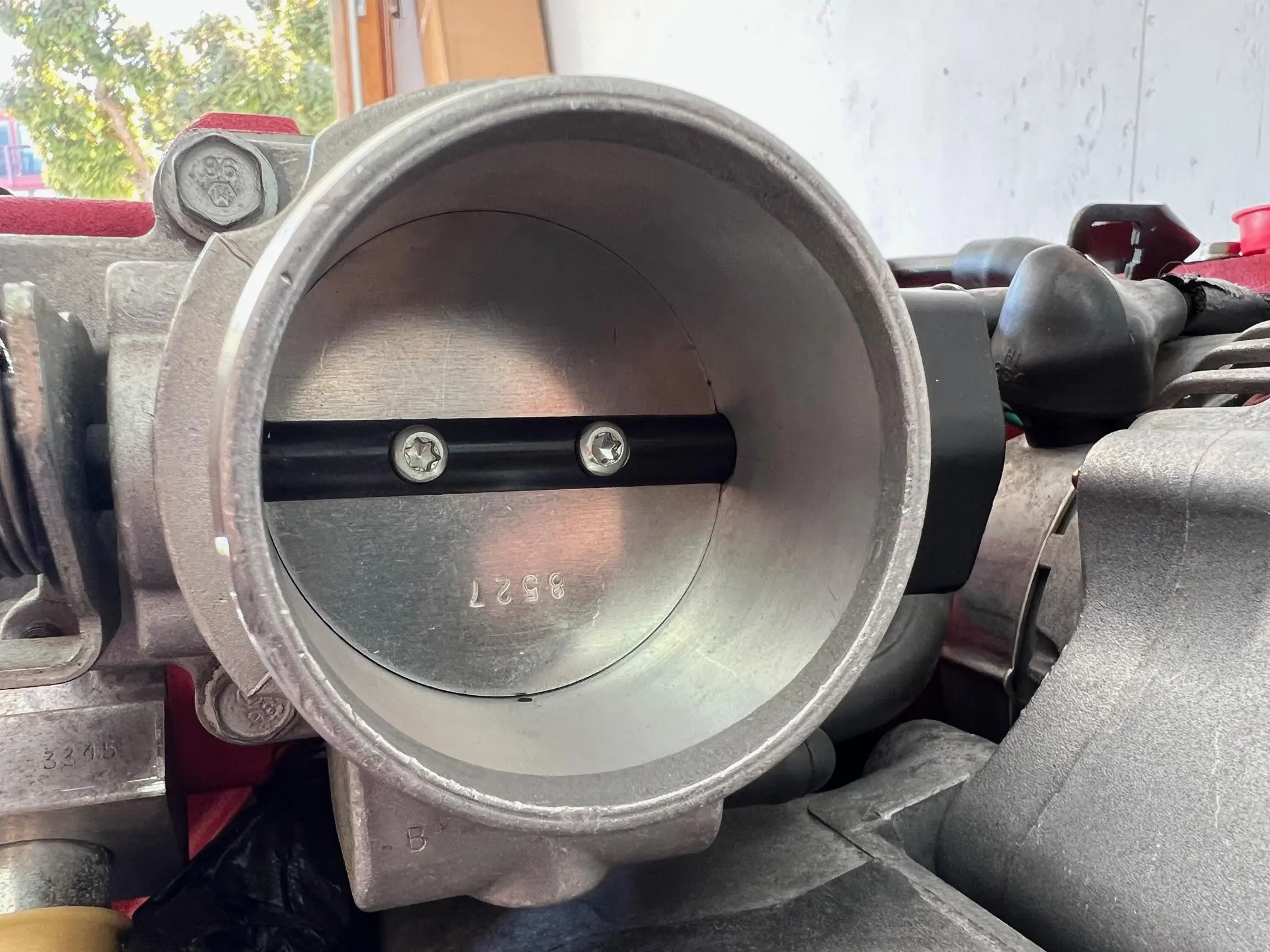
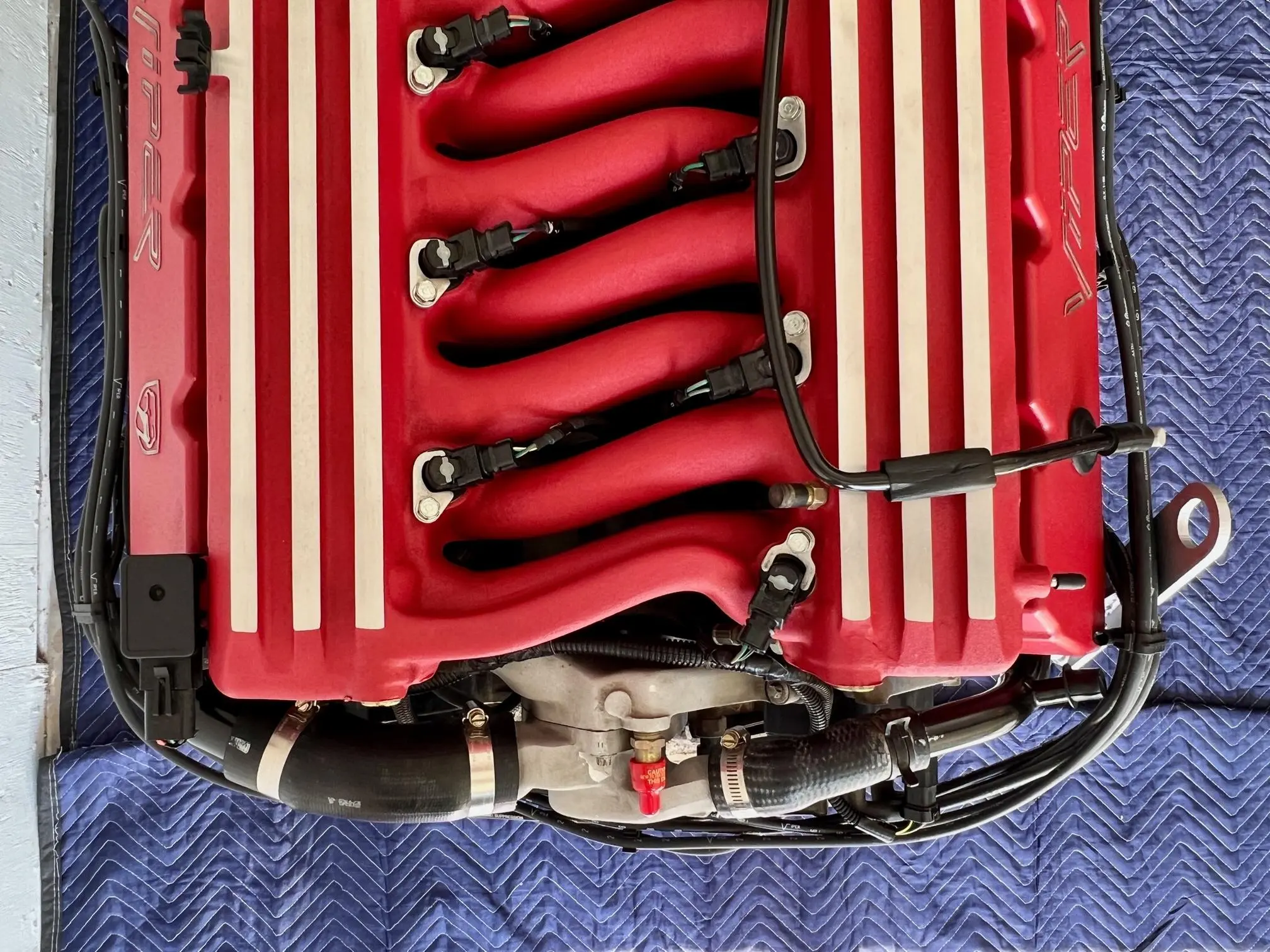
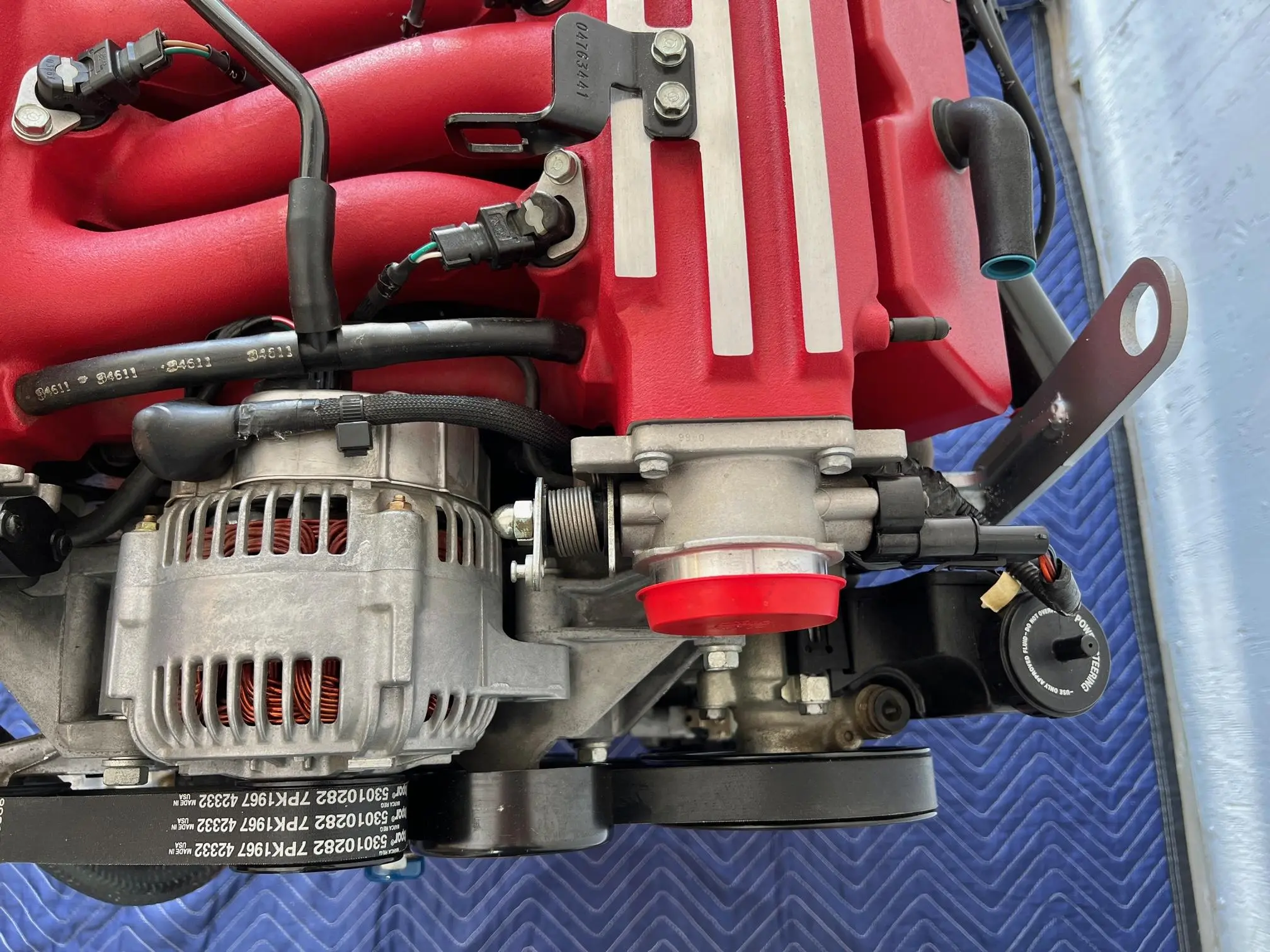
- Intake Manifold
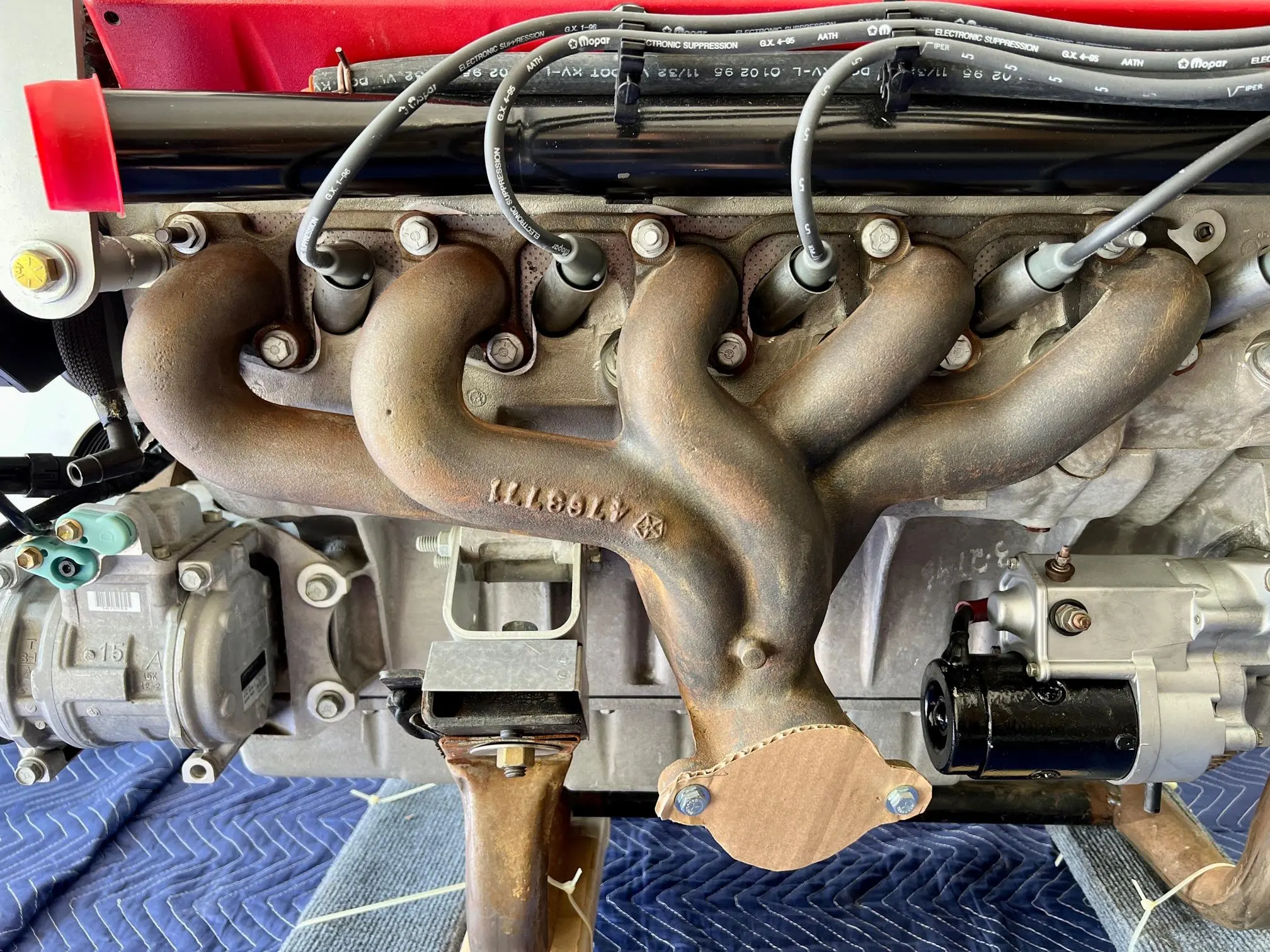
- Exhaust Manifolds
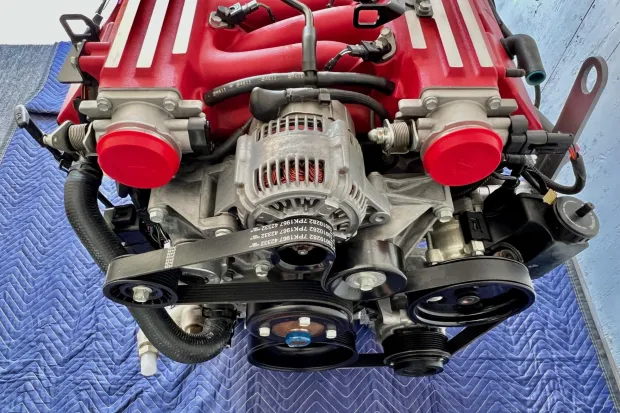
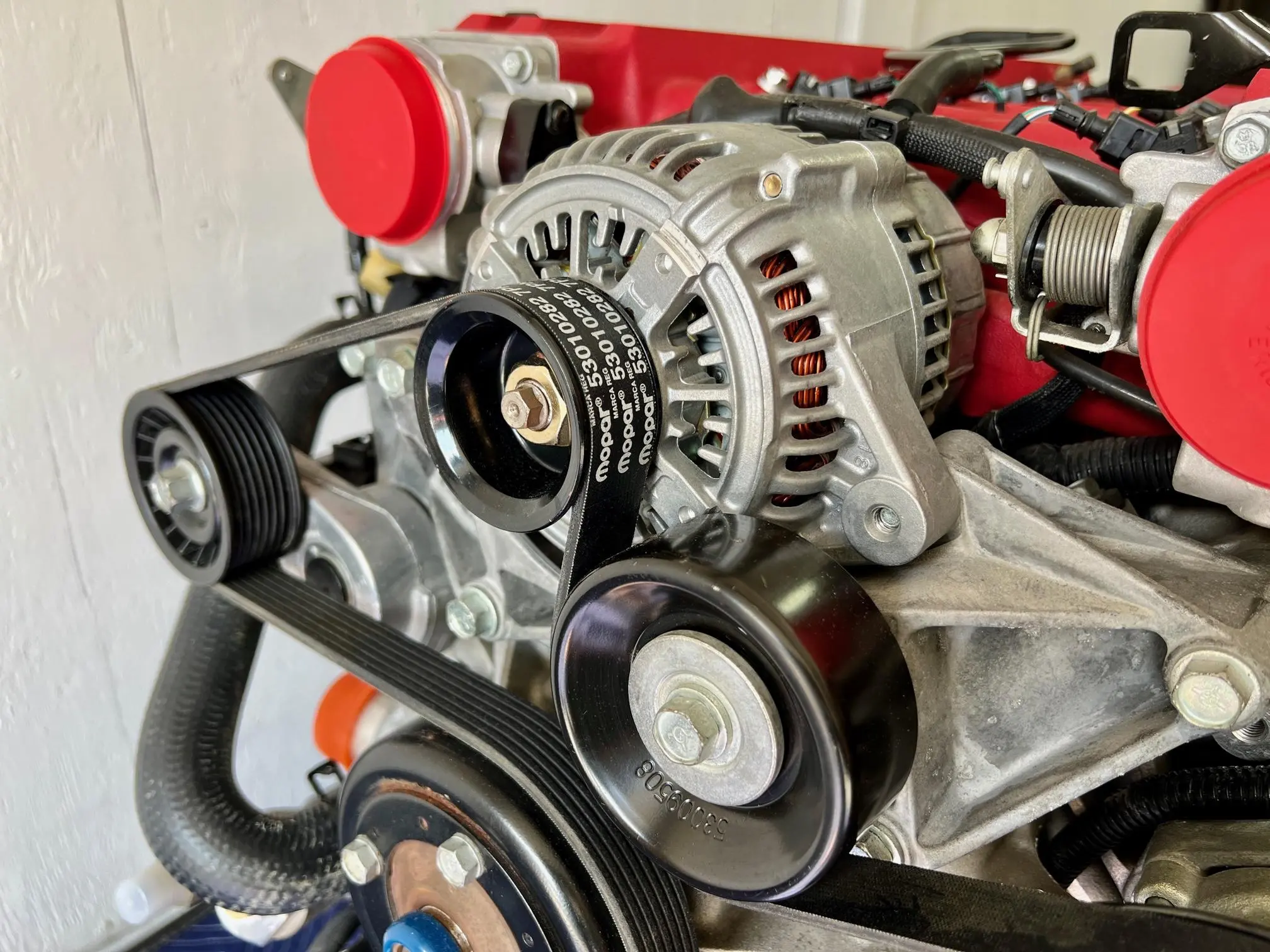
- Alternator
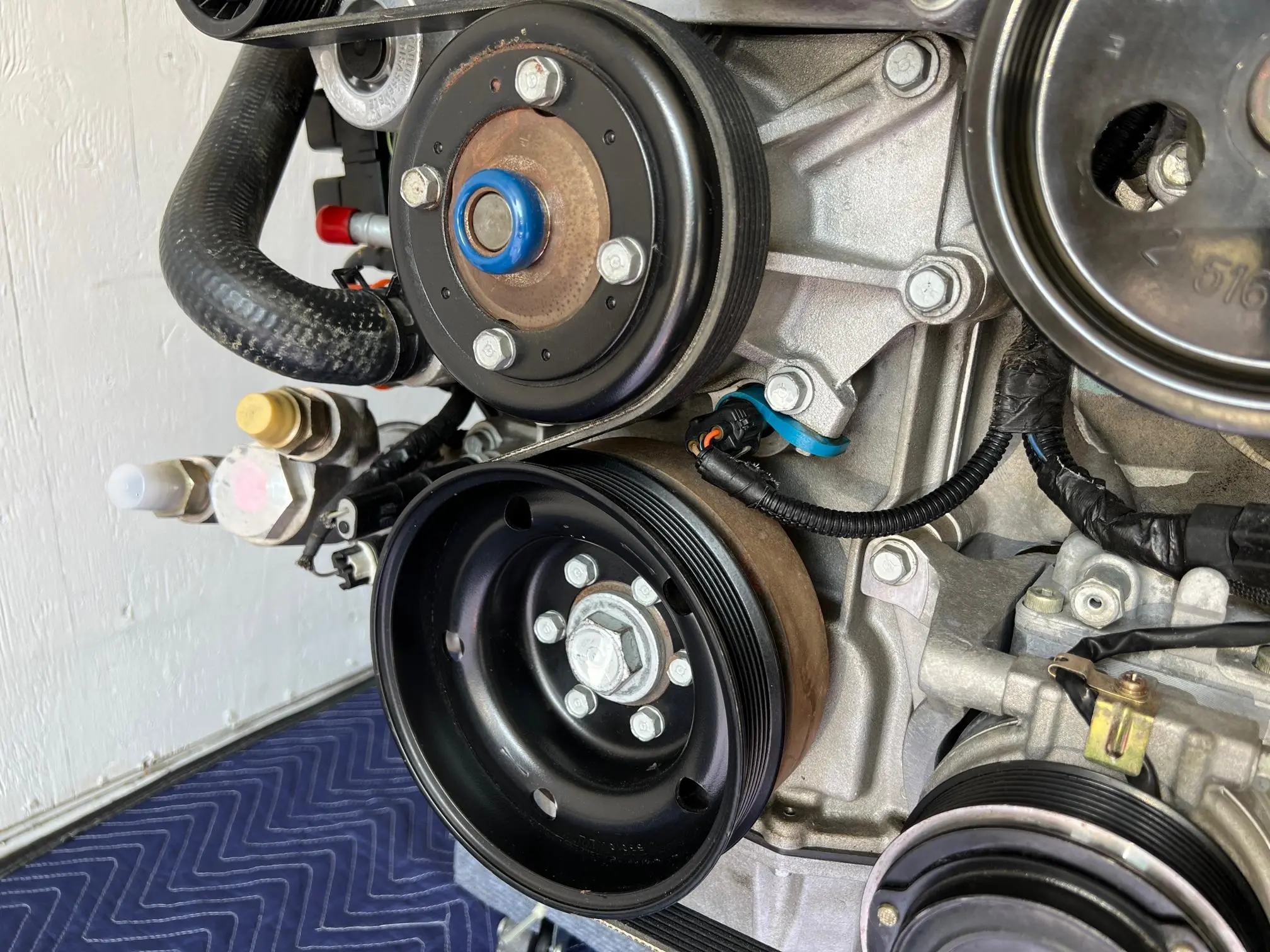
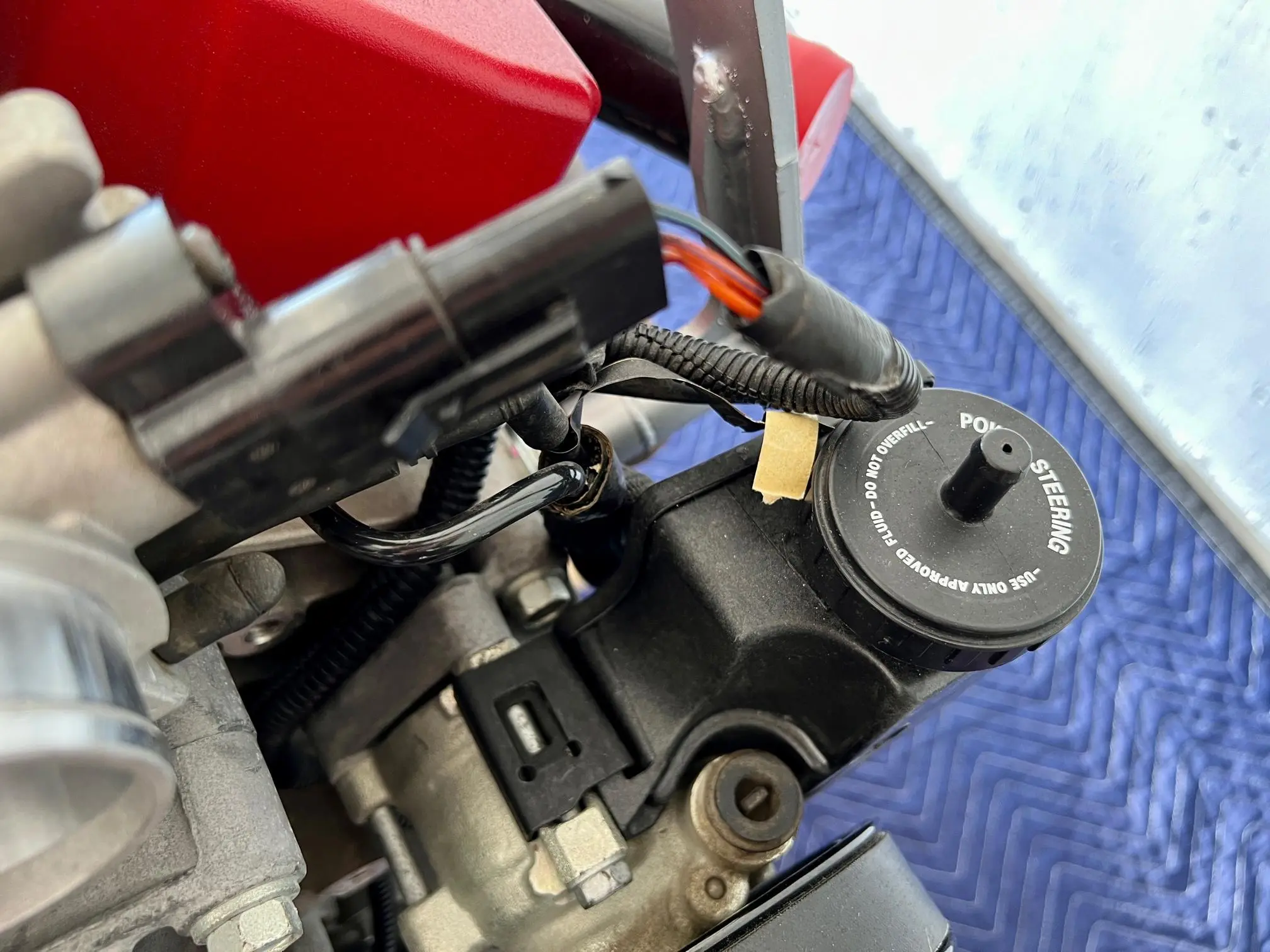
- Power-Steering Pump
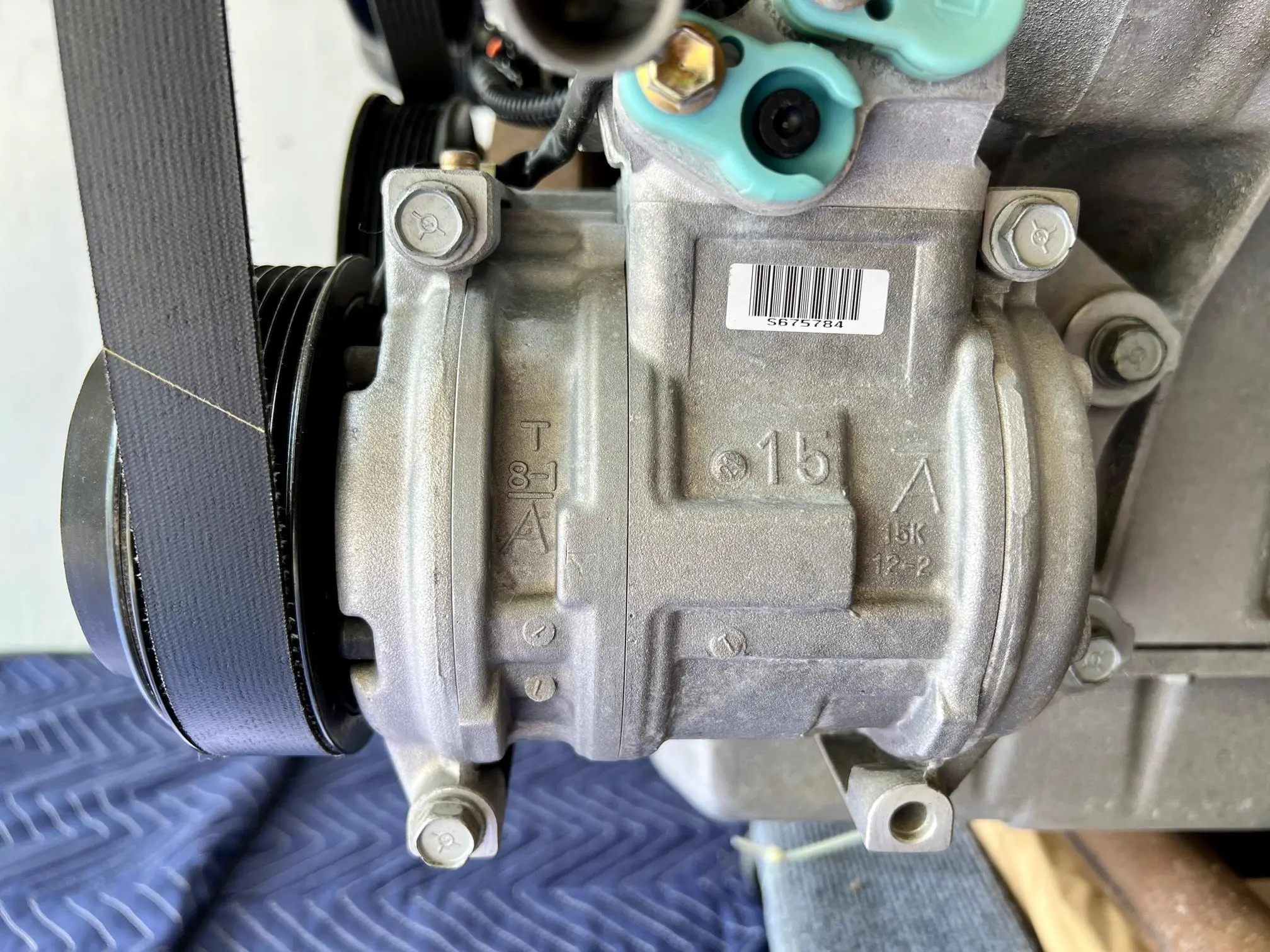
- Air-Conditioning Compressor
- Starter Motor
- Oil-Filter Housing
- Engine Mounts
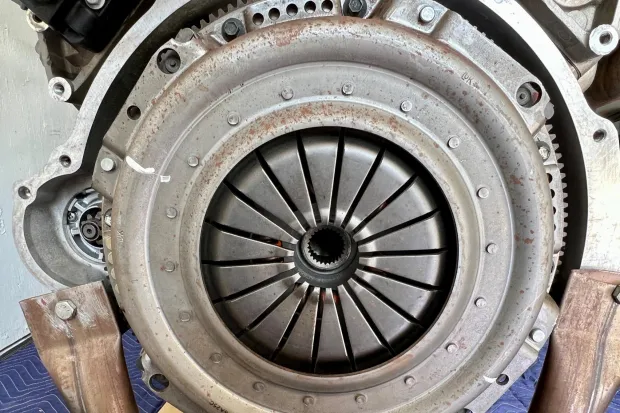
- Clutch Components
- Shipping Crate
- Stands & Wood Dolly
The Lamborghini Connection
While the engine’s architecture was loosely based on Chrysler’s LA-series V8 (specifically the 5.9L Magnum), it was far from a simple truck engine. Because the iron-block truck V10 was too heavy for a sports car, Chrysler called upon Lamborghini (which Chrysler owned at the time) to redesign the block and heads in aluminum alloy. This saved significant weight while providing the cooling and structural integrity needed for a high-performance application.
Engine Specifications (RT/10 Era)
The 8.0L V10 evolved through two distinct phases during the RT/10’s production run:
| Feature | Generation I (1992–1995) | Generation II (1996–2002) |
| Displacement | 8.0L (488 cu in) | 8.0L (488 cu in) |
| Horsepower | 400 hp @ 4,600 rpm | 415–450 hp @ 5,200 rpm |
| Torque | 465 lb-ft @ 3,600 rpm | 488–490 lb-ft @ 3,700 rpm |
| Valvetrain | OHV 20-valve (Pushrod) | OHV 20-valve (Pushrod) |
| Block/Head Material | Aluminum / Aluminum | Aluminum / Aluminum |
| Compression Ratio | 9.1:1 | 9.6:1 |
Key Technical Highlights
-
Low-End Grunt: Unlike European supercars of the era that relied on high RPMs, the Viper V10 produced the majority of its torque right off the line. By just 1,200 rpm, it was already pushing out roughly 300 lb-ft of torque.
-
Odd-Firing Order: The early 8.0L engines used an “odd-firing” sequence, which gave the original Viper its unique, somewhat rhythmic “drone” and a distinct exhaust note compared to traditional V8s.
-
Thermal Challenges: The RT/10 featured side-exit exhausts (until 1996), which ran through the rocker panels. This kept the engine breathing freely but made the door sills notoriously hot—often enough to burn a driver’s leg if they weren’t careful getting out.
-
No Driver Aids: During the RT/10’s early years, this engine was paired with a car that had no ABS, no traction control, and no stability control. It was a pure “analog” experience where the throttle acted as the only traction management system.
Reviews
There are no reviews yet.