
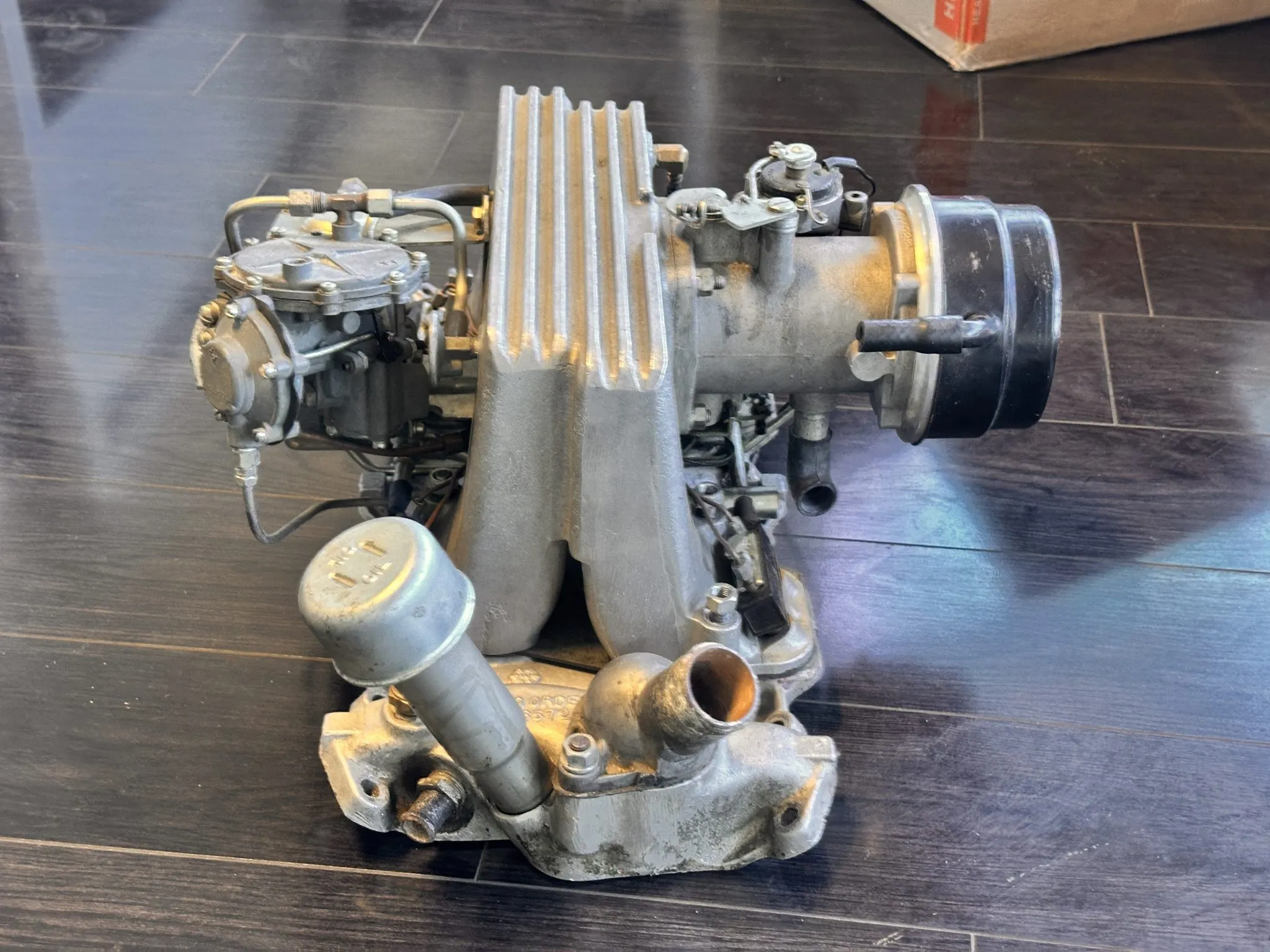
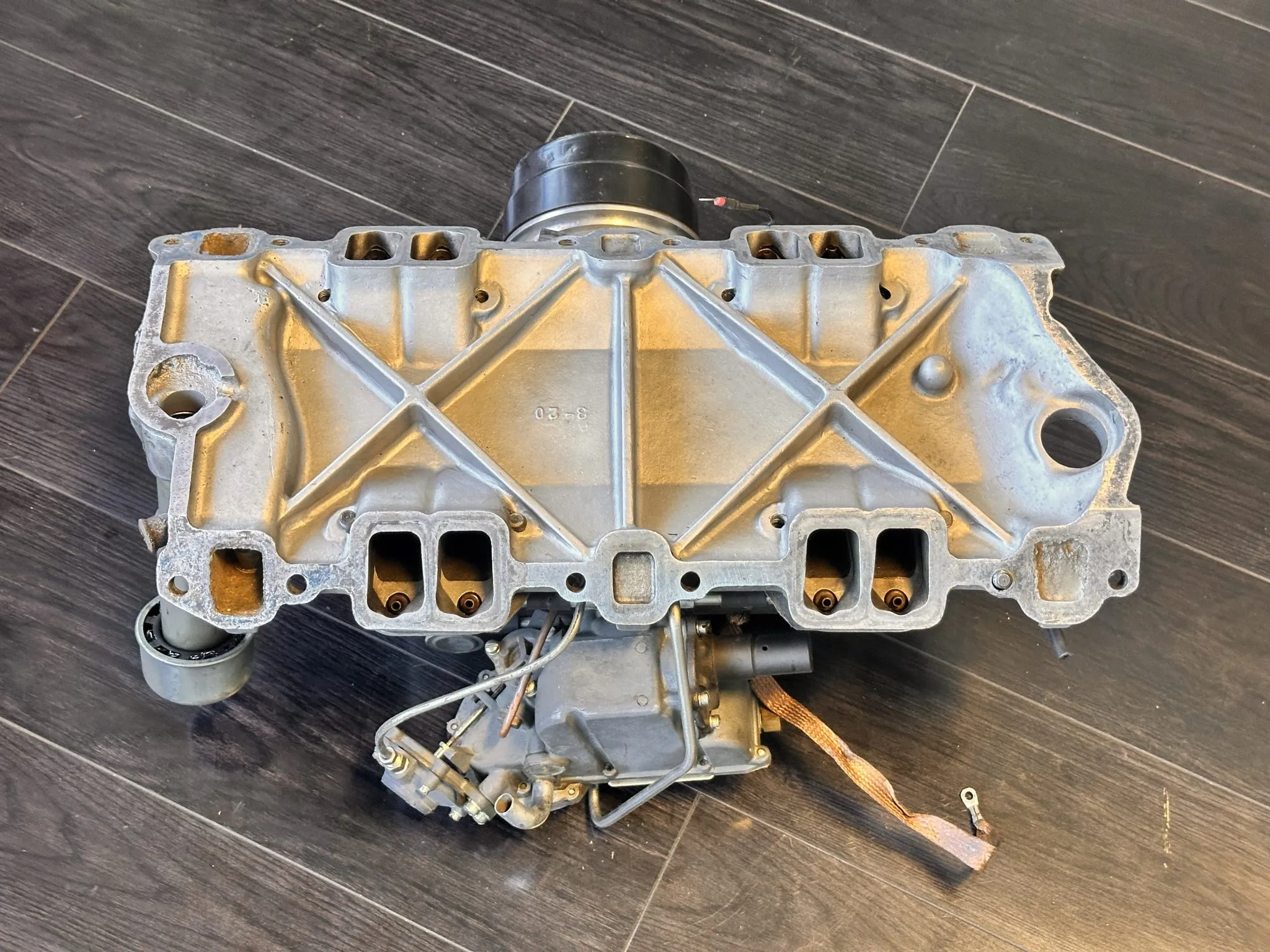
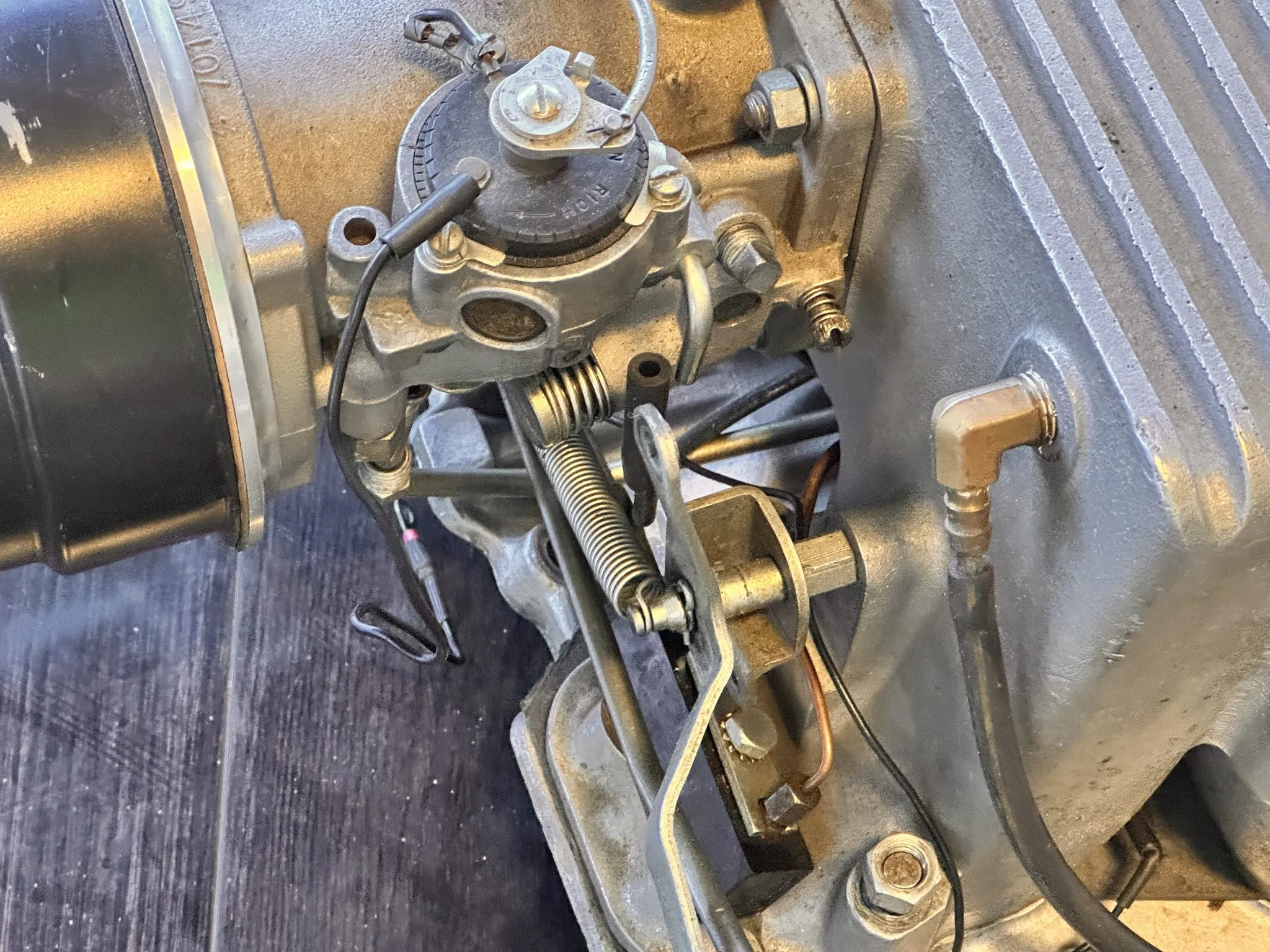
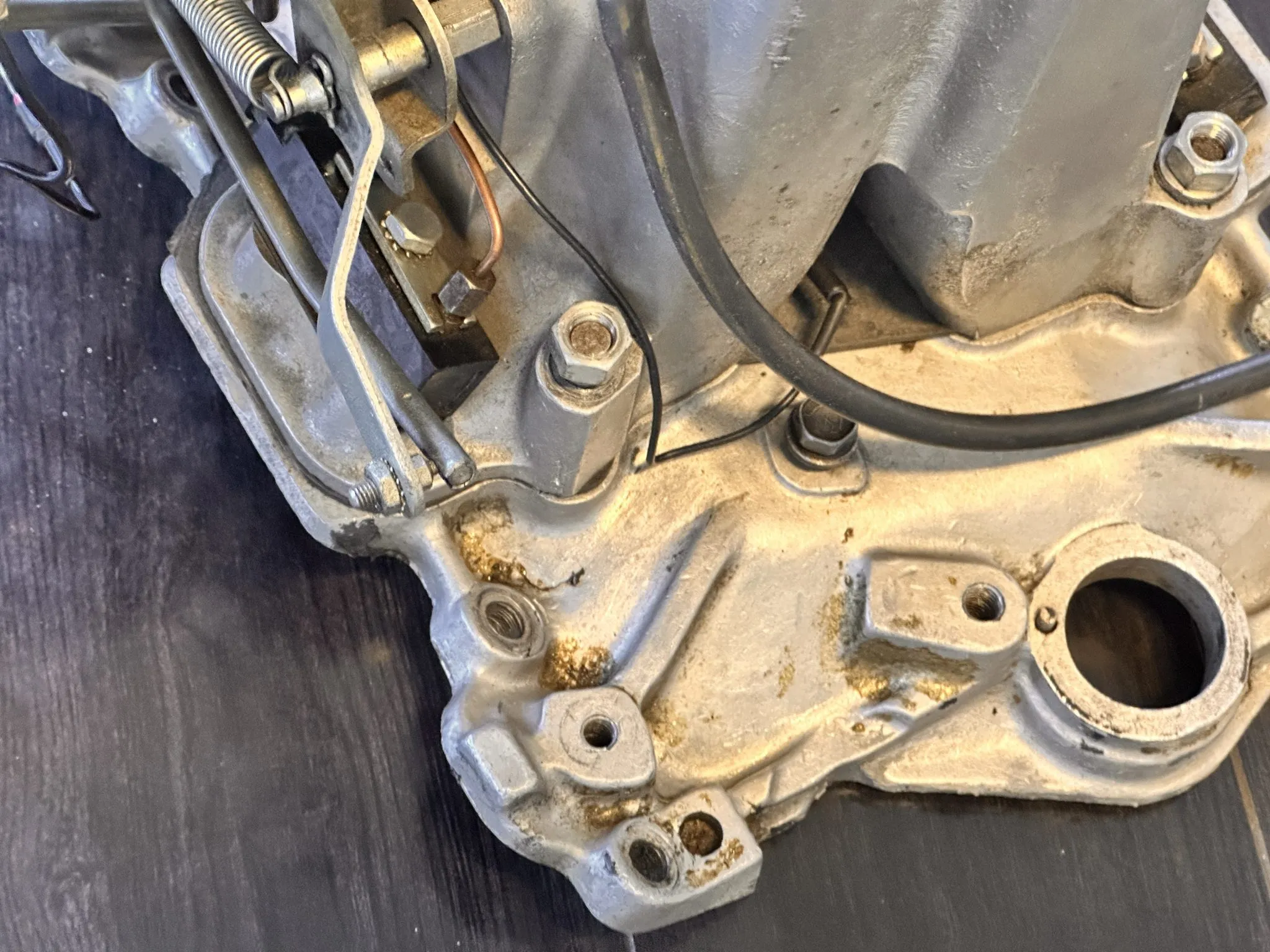
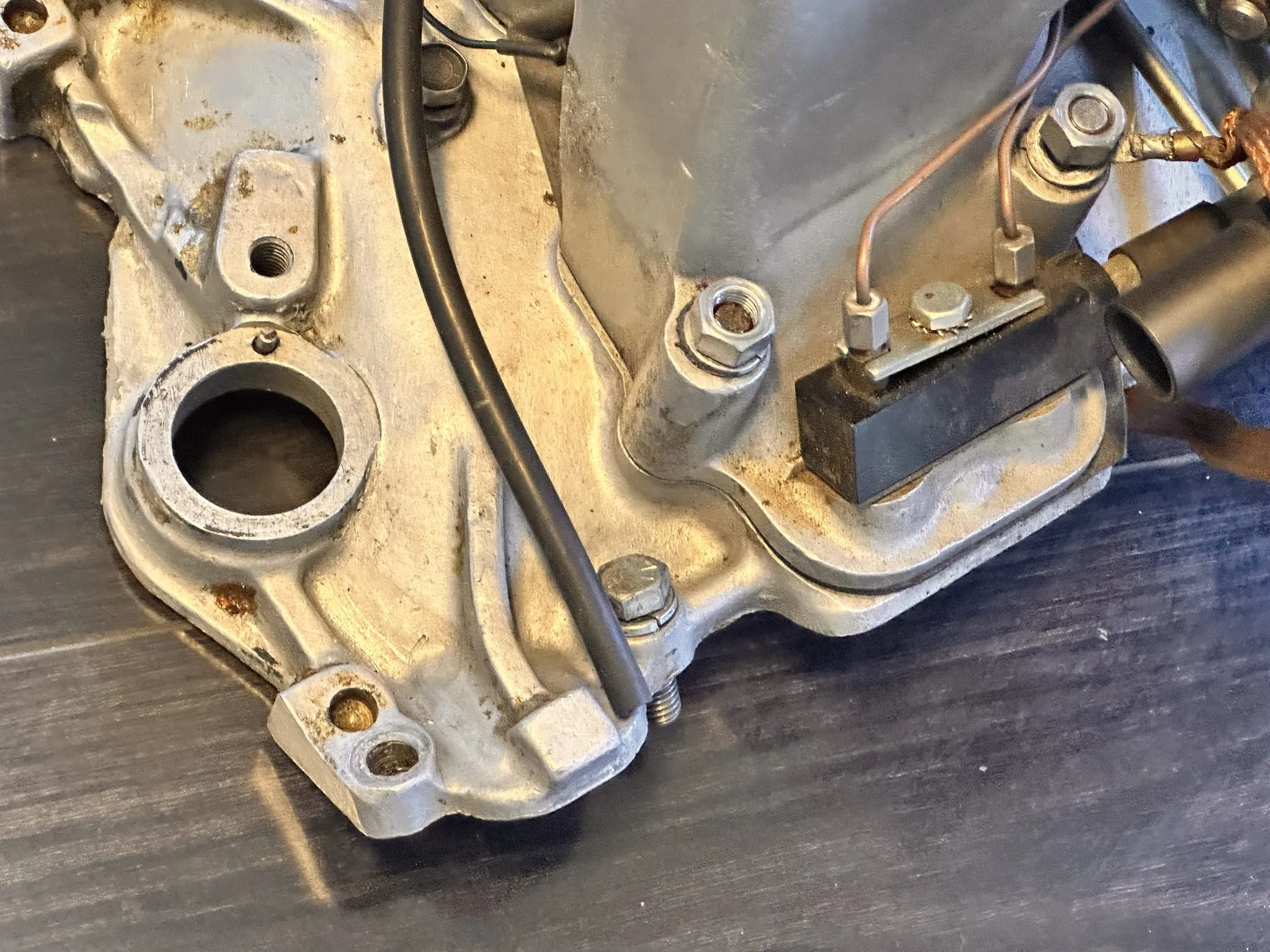
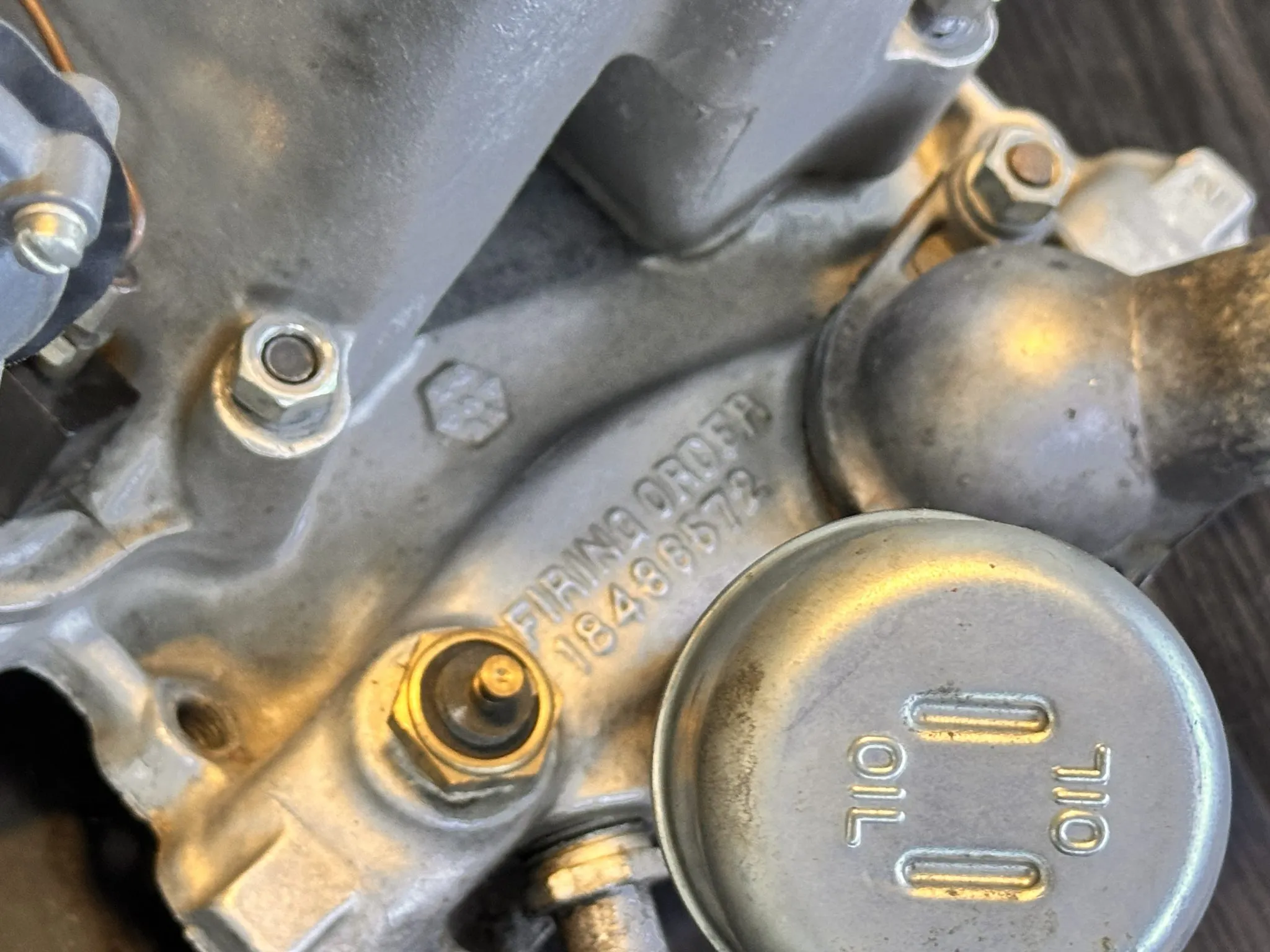
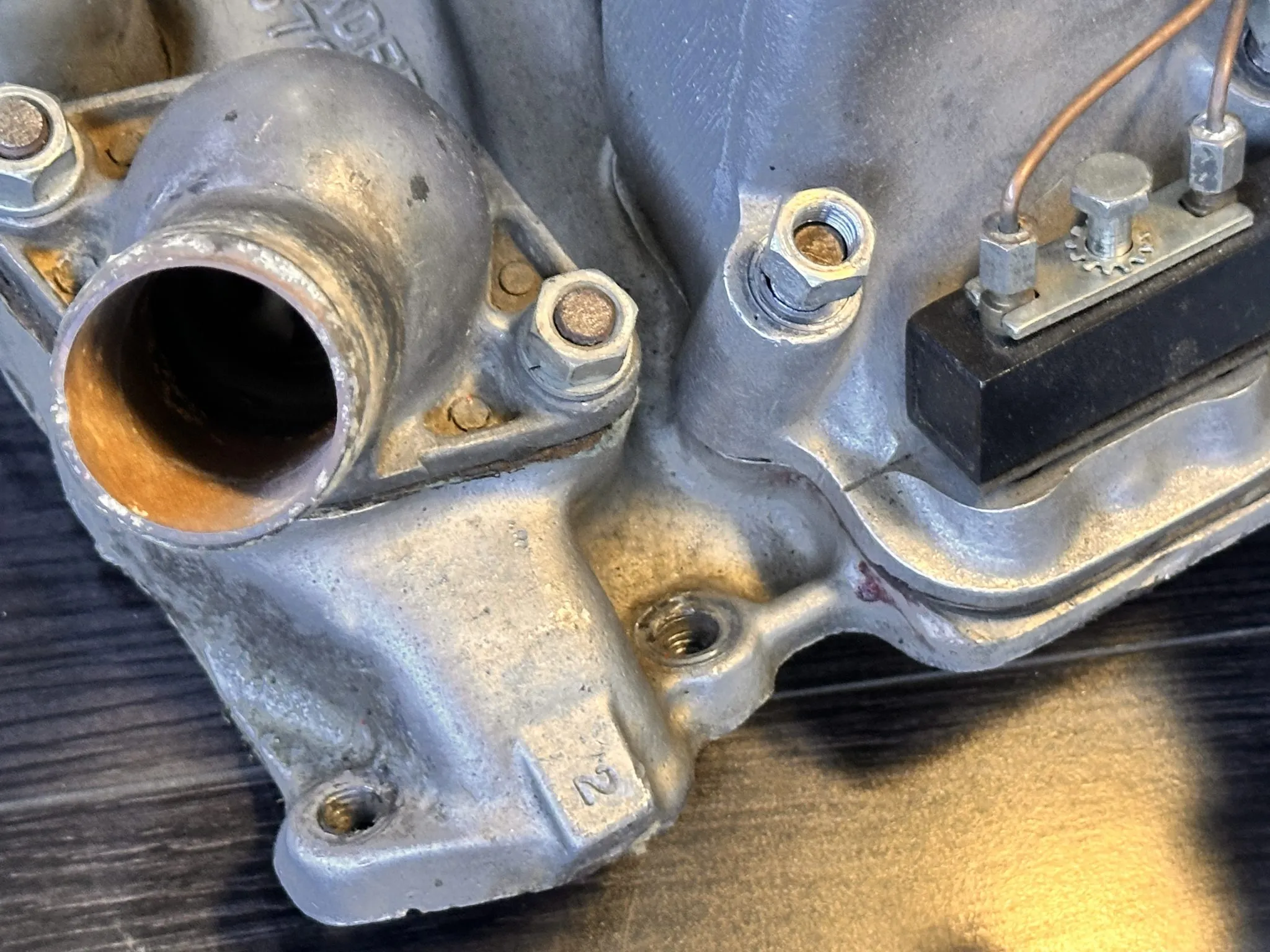
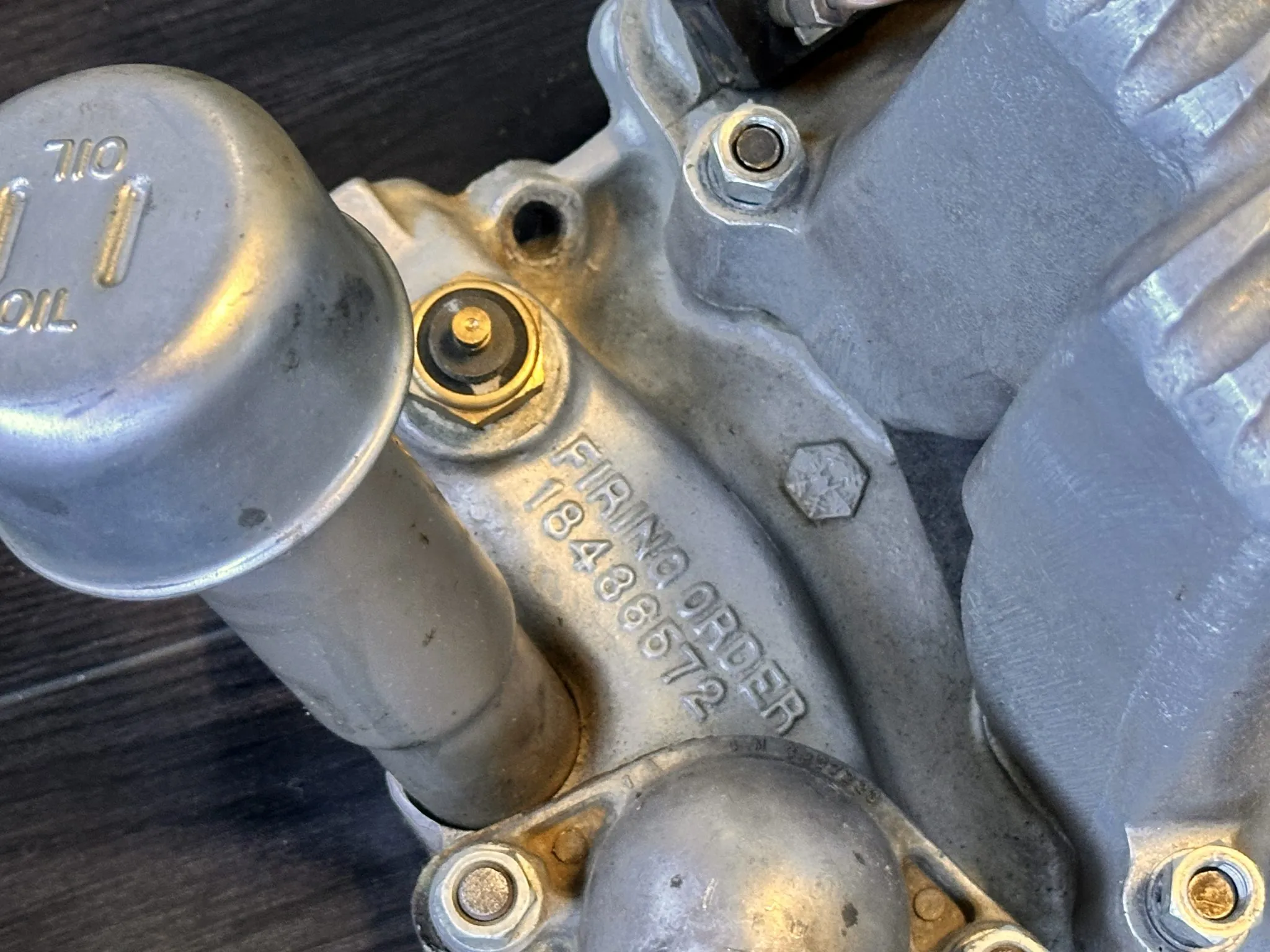
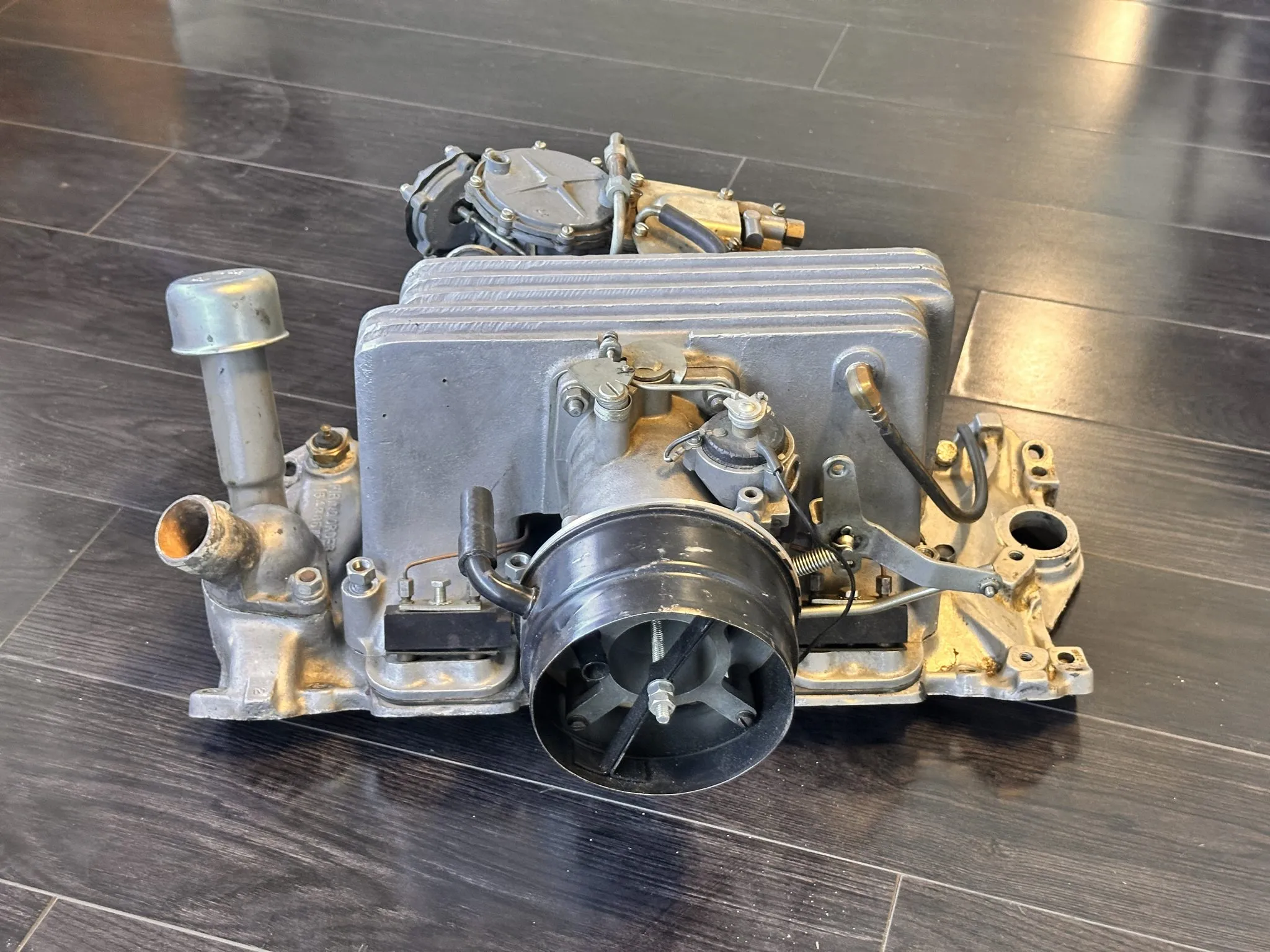
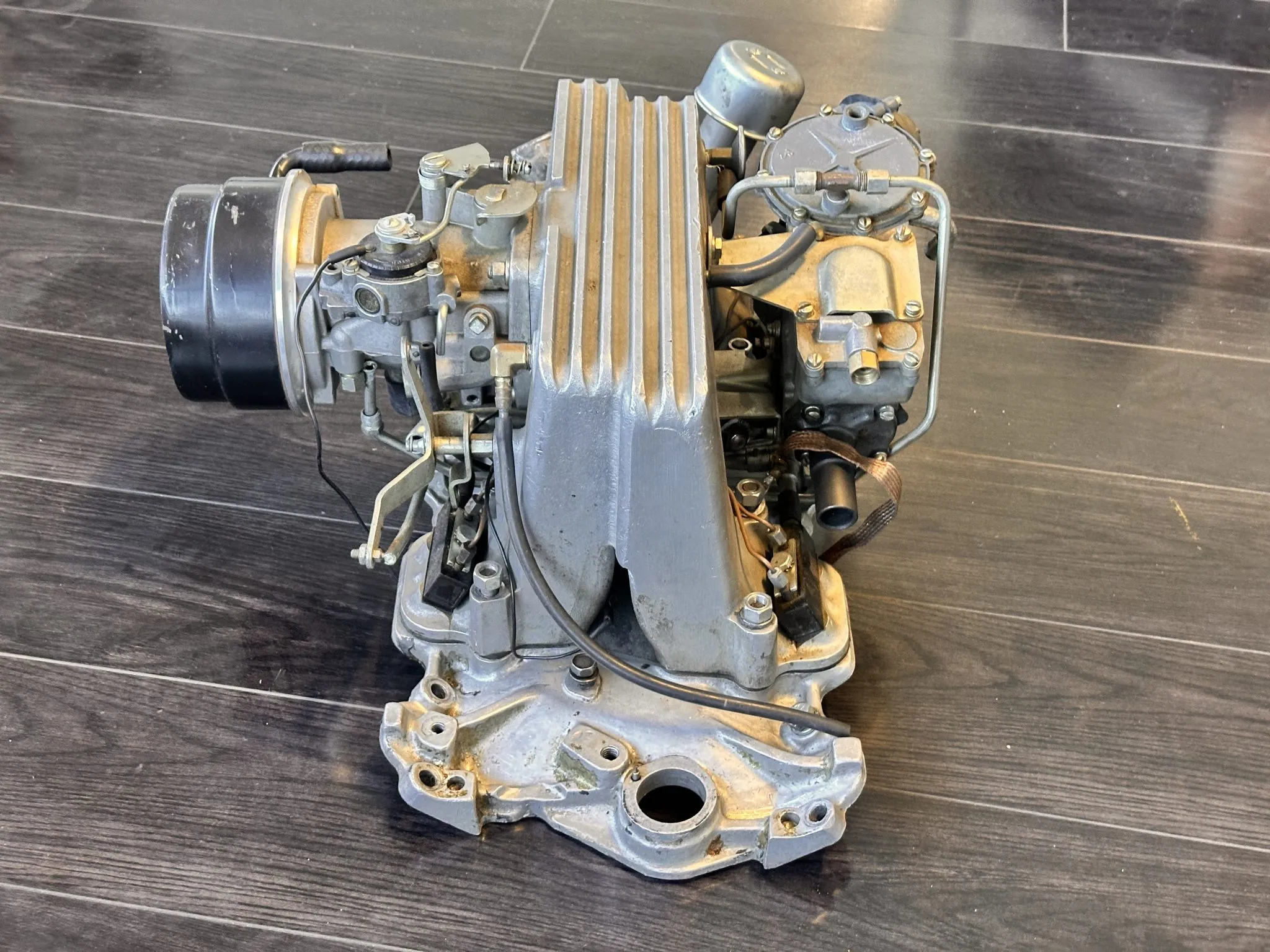
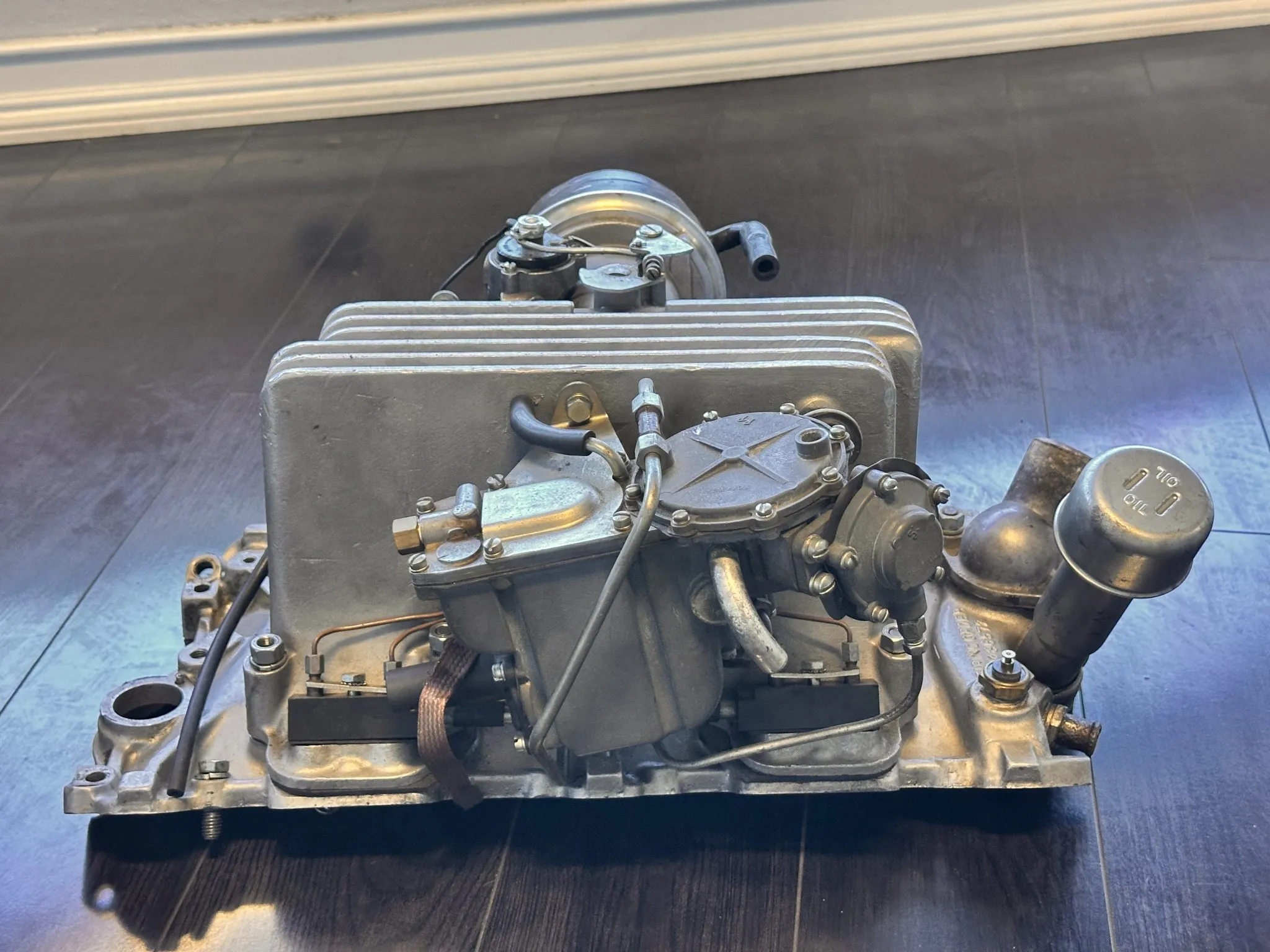
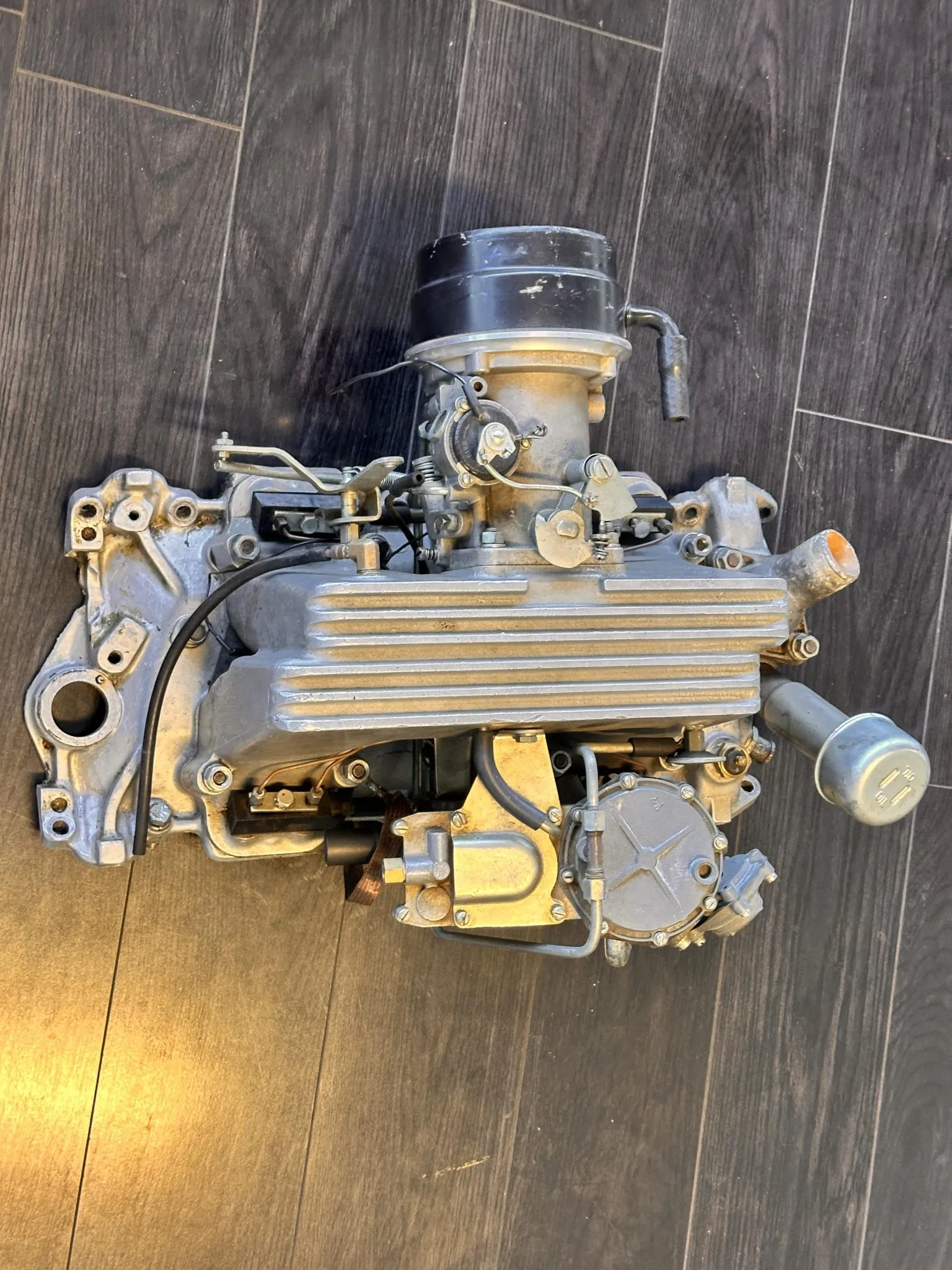
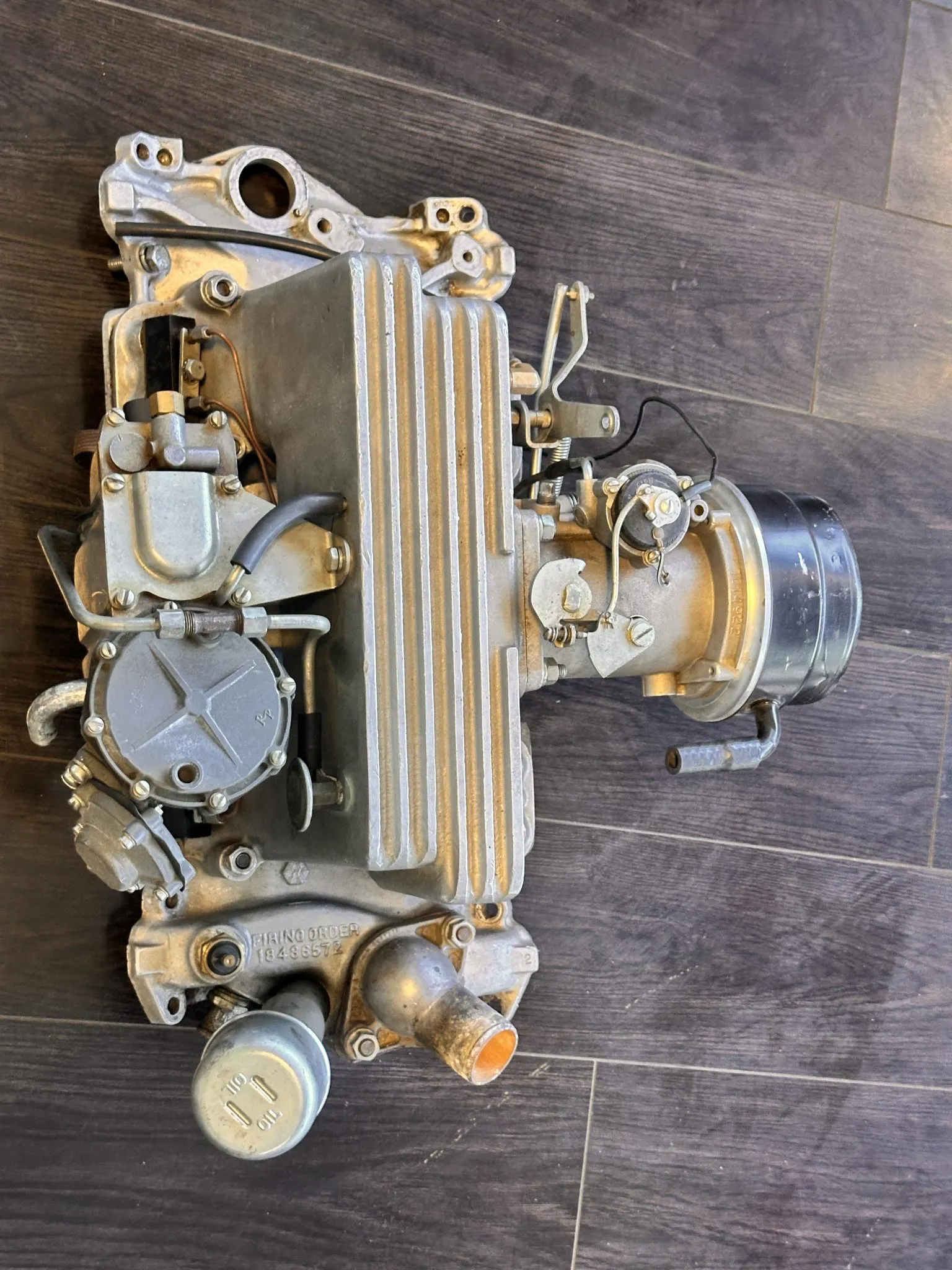
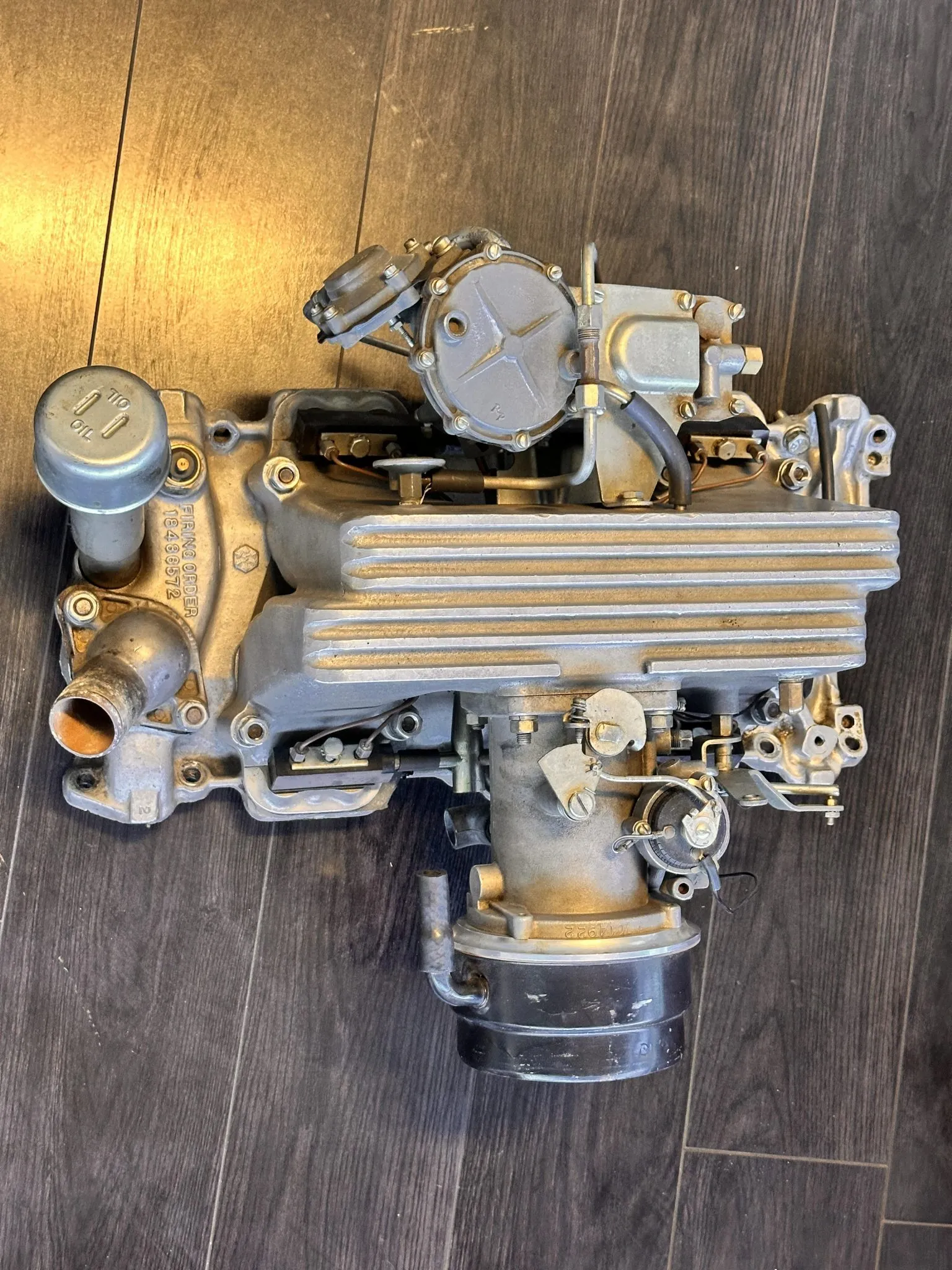
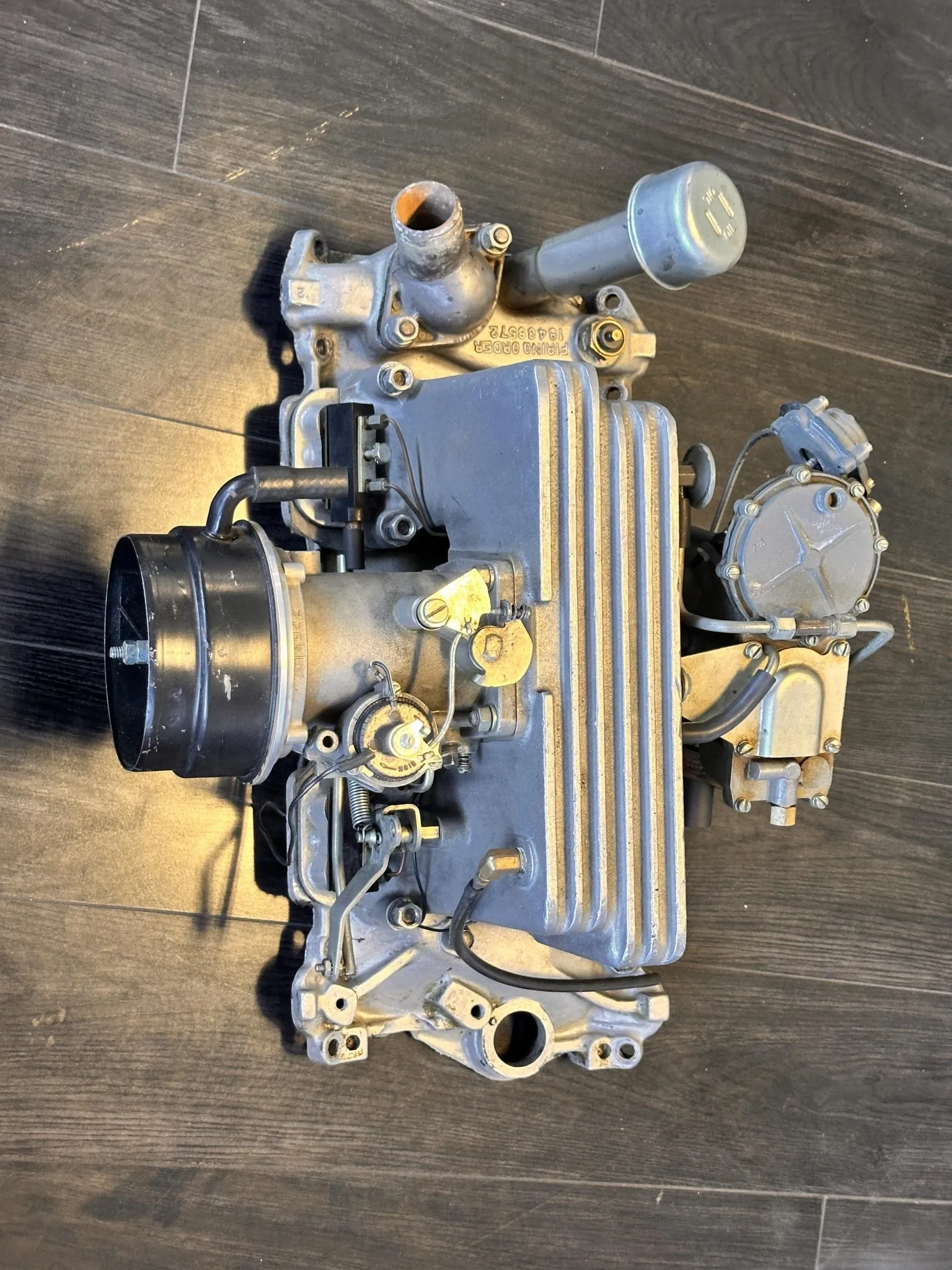
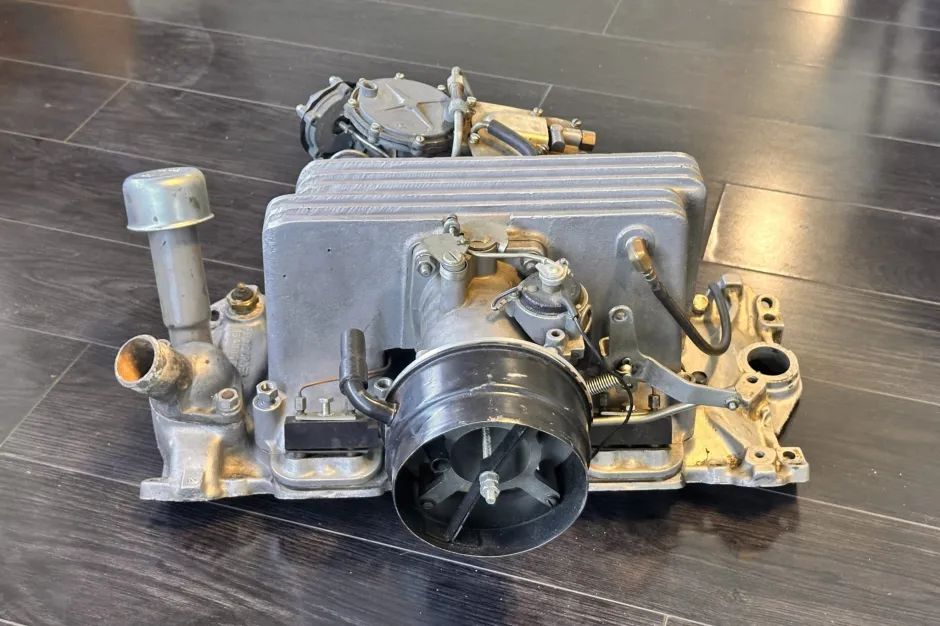
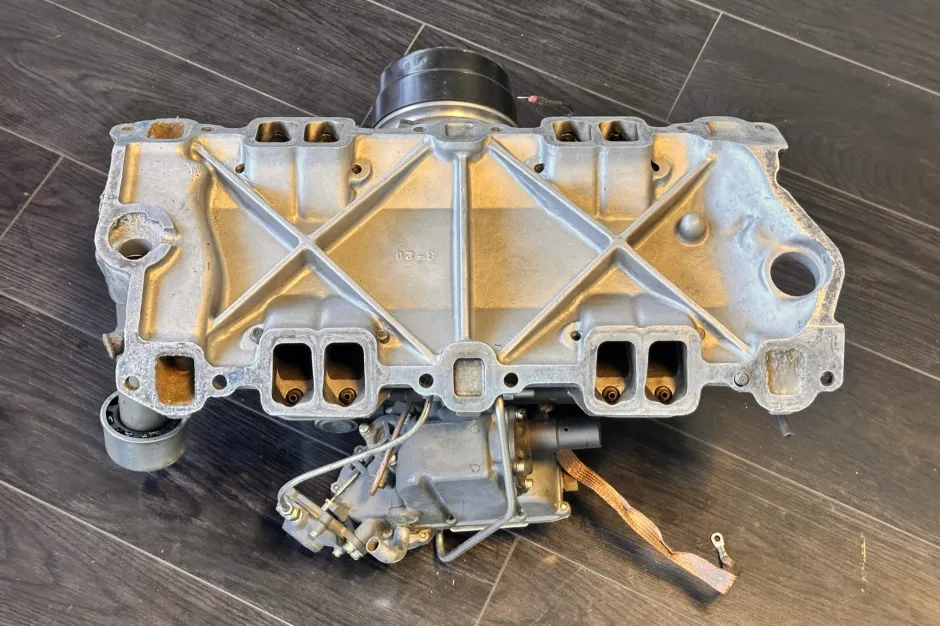
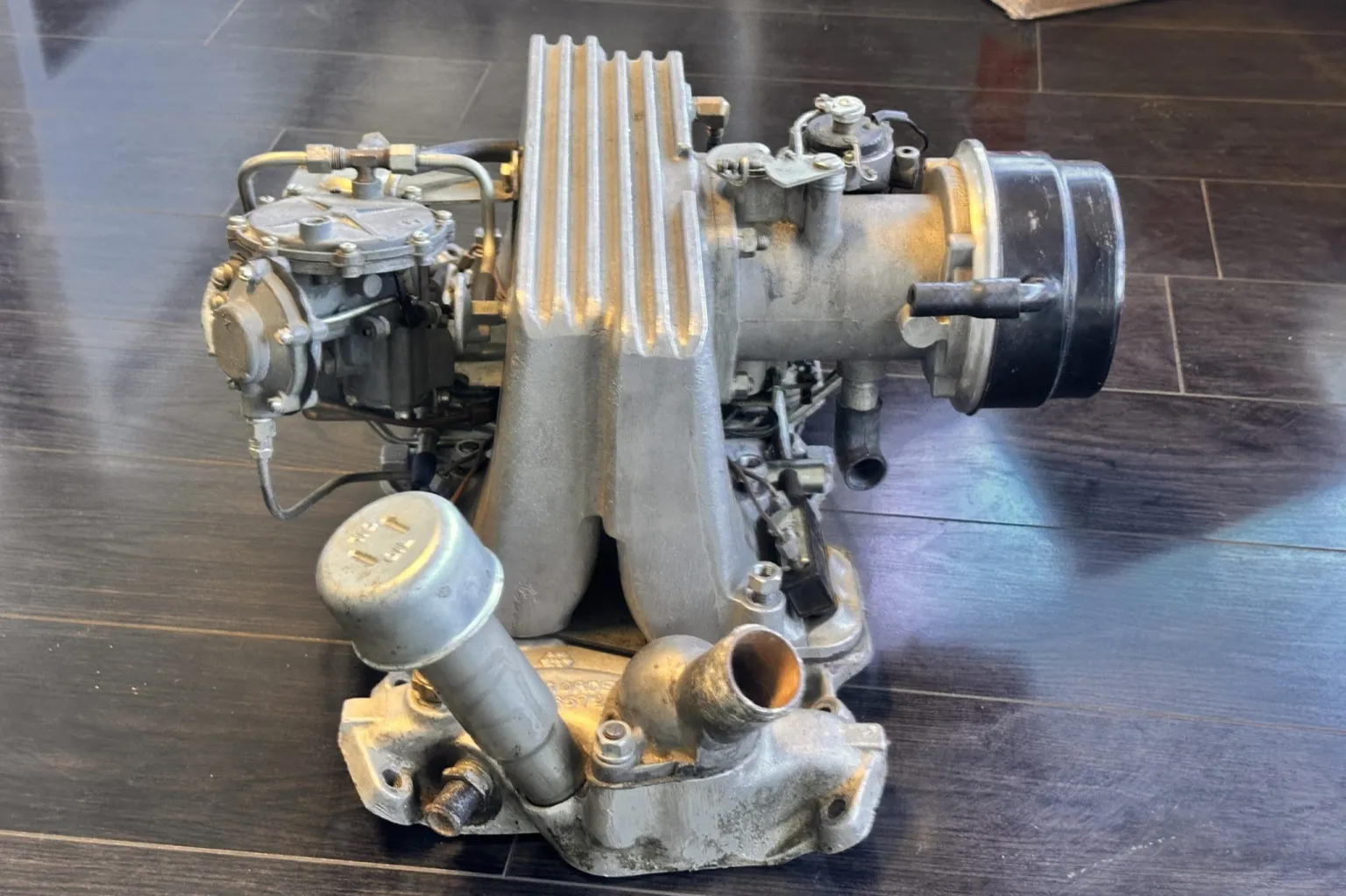
Rochester Fuel Injection System for Chevrolet Corvettester “Ramjet” Mechanical Fuel Injection (1957–1965) is a cornerstone of Corvette history. It transformed the Corvette into a world-class performance machine, famously achieving the “one horsepower per cubic inch” milestone.
Listing Details
- 1958 Rochester Fuel Injection System
- Intake Manifold
- Finned Aluminum Plenum
- Air Meter
- Fuel Meter
Unlike modern electronic fuel injection (EFI), the Rochester system is purely mechanical, relying on vacuum signals and high-pressure fuel to manage engine timing and delivery.
The Three Eras of “Fuelie” Design
You can quickly identify the age of a Rochester system by the design of its “doghouse” (the large aluminum plenum).
| Period | Plenum Design | Visual Characteristic |
| 1957–1959 | Sand-Cast / Finned | Rougher texture; features distinct cooling fins on the top. |
| 1960–1962 | Flat Top | Smoother finish with a large, flat surface on the upper plenum. |
| 1963–1965 | Die-Cast | The most refined look; used on the legendary 327/360hp and 375hp engines. |
How It Works (Mechanical Magic)
The system is divided into two primary sub-assemblies that communicate via vacuum:
-
The Air Meter: Measures how much air the engine is sucking in and sends a “venturi vacuum” signal to the fuel meter.
-
The Fuel Meter: Houses a high-pressure pump driven by a cable from the distributor. It uses the vacuum signal to move a “spill plunger,” which decides how much fuel goes to the injectors and how much is bypassed back to the tank.
-
The “Spider”: A central hub with eight individual stainless-steel lines that spray a continuous flow of fuel directly into the intake ports.
The “Big Block” Killer
In 1965, the Rochester system’s reign ended. A fuel-injected 327ci engine cost $538.00, while the new, more powerful 396ci Big Block V8 cost only $292.70. Most buyers chose the “cheap” horsepower of the big block, leading Chevrolet to discontinue the option until the return of Cross-Fire Injection in 1982.
2026 Market Value & Maintenance
As of 2026, original “Fuelie” units have become blue-chip collectibles. Because many were swapped for carburetors in the ’70s, complete units are rare.
-
Complete Units: A verified, date-matched 1963–65 system with the correct distributor and air cleaner typically sells for $5,500 to $9,000 at auction.
-
Specialized Service: Because these systems are notoriously “fickle” and few mechanics understand them, specialized restoration is expensive. A full professional rebuild by a master (like John DeGregory or Ken Kayser) can cost $2,500 to $4,500.
-
Modern Fuel Issue: The Rochester system was designed for 1960s leaded gasoline. In 2026, enthusiasts often struggle with “percolation” (fuel boiling in the spider lines) caused by modern ethanol blends. Many owners now use electric cooling fans or heat shields specifically to protect the fuel meter from engine heat.
Reviews
There are no reviews yet.