
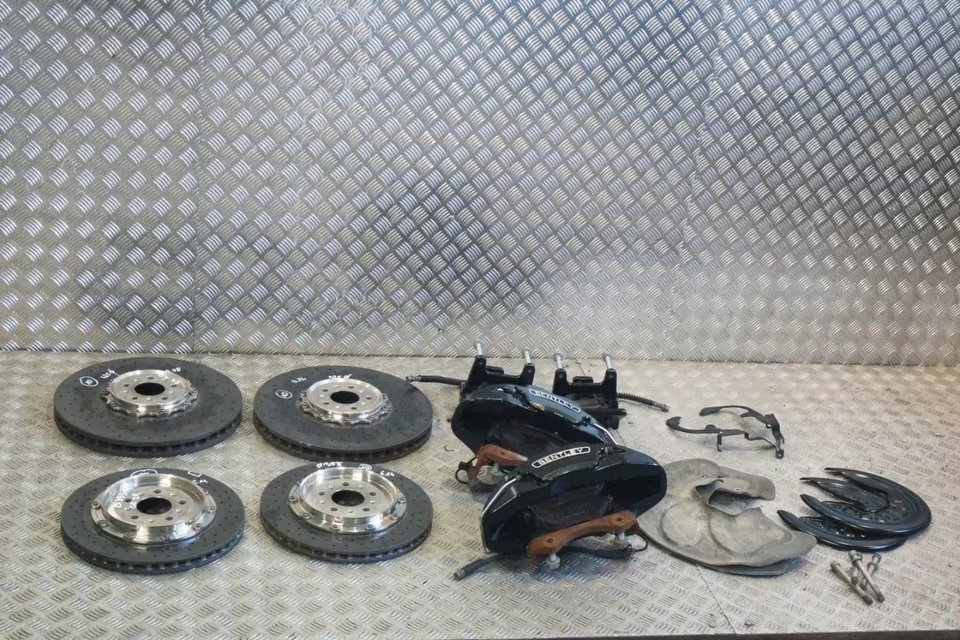


BENTLEY GT BRAKE SYSTEM BRAKE CERAMIC CERAMIC BREMBO
Bentley’s Carbon Silicon Carbide (CSiC) brake system is one of the most powerful ever fitted to a production car. Primarily manufactured by Brembo (calipers) and SGL Carbon (discs), this system is designed to provide fade-free stopping power for a vehicle that can exceed \text{ mph}$.
1. Technical Specifications (3S / New Model)
The current generation Bentley Continental GT (2019–Present) features the world’s largest front brake discs.
-
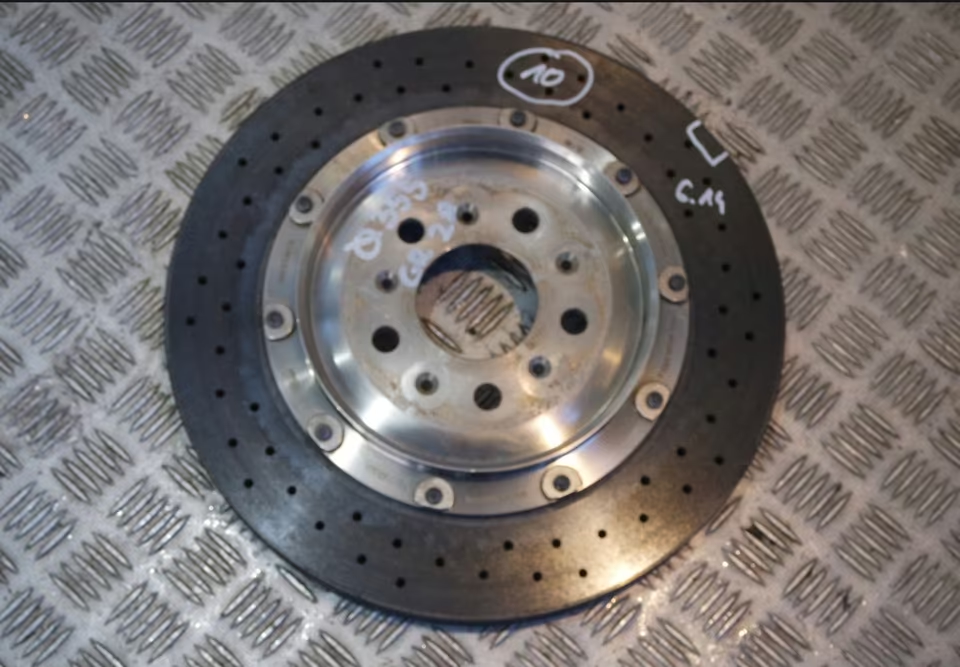
Front Discs: $440 \text{ mm} \times 40 \text{ mm}$ (Carbon Ceramic).
-
Front Calipers: 10-Piston Brembo Monobloc (Massive aluminum units).
-
Rear Discs: $410 \text{ mm} \times 32 \text{ mm}$ (Carbon Ceramic).
-
Rear Calipers: 4-Piston Brembo (with integrated electronic parking brake).
-
Weight Saving: Total unsprung weight reduction of approximately $33 \text{ kg}$ ($73 \text{ lbs}$) compared to the standard iron system.
2. Key Part Numbers
If you are sourcing individual components, use these references:
| Component | Side | Part Number |
| Front Ceramic Disc | Left | 3W0615301T (Gen 2) / 3S0615301 (Gen 3) |
| Front Ceramic Disc | Right | 3W0615302J (Gen 2) / 3S0615302 (Gen 3) |
| Front Ceramic Pads | Axle Set | 3W0698151AB |
| Rear Ceramic Pads | Axle Set | 3W0698451E |
3. Why Ceramic? (CSiC vs. Steel)
-
Fade Resistance: Steel brakes lose efficiency as they heat up (brake fade). Ceramics can operate at temperatures exceeding $1000^\circ\text{C}$ without losing “bite.”
-
Durability: Under normal road use, ceramic discs can last the entire lifetime of the vehicle ($100,000\text{+ miles}$), whereas steel discs require replacement every $30,000$ miles.
-
Dust: Ceramic brakes produce almost zero visible brake dust, keeping your Mulliner wheels clean.
4. Maintenance & Risks
-
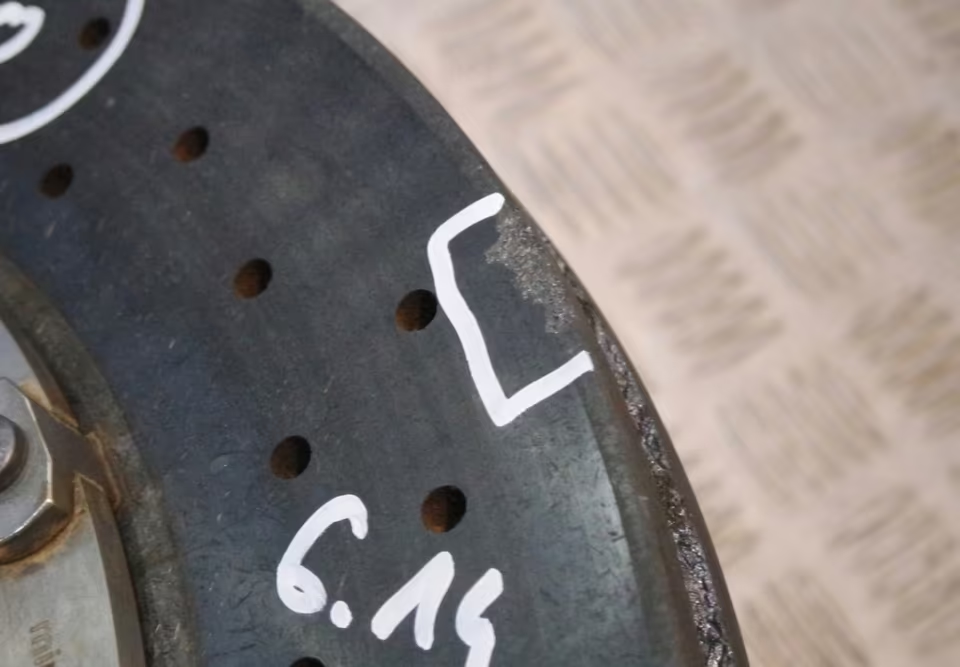
Chipping: The most common way these discs “fail” is physical damage. If a mechanic accidentally bangs a wheel against the disc during a tire change, the ceramic can chip. Once chipped, the disc is structurally compromised and cannot be resurfaced; it must be replaced.
-
Brake Squeal: Carbon ceramics are notorious for squealing when cold. This is a characteristic of the material, not a defect.
-
Replacement Cost: In 2026, a single front ceramic disc typically costs between $5,000 and $7,500 USD.
Reviews
There are no reviews yet.