
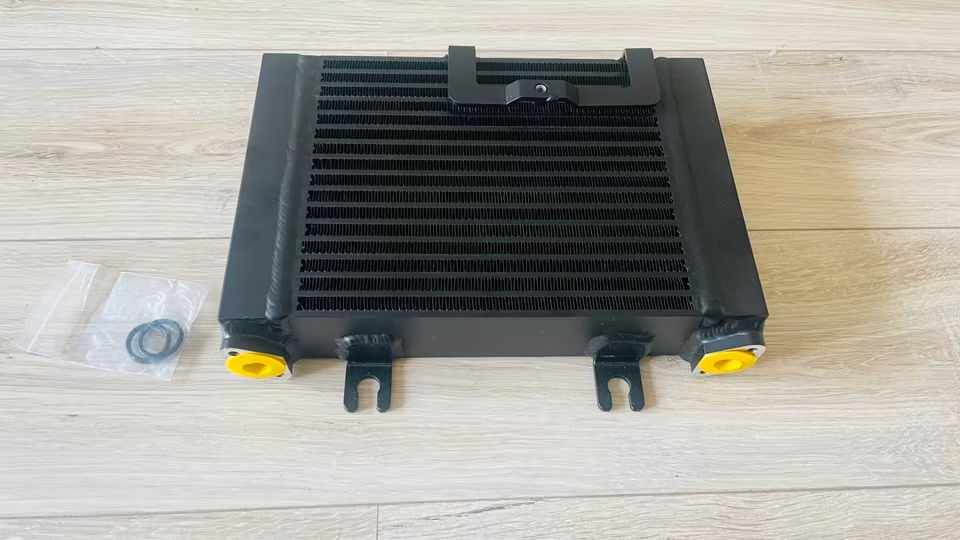
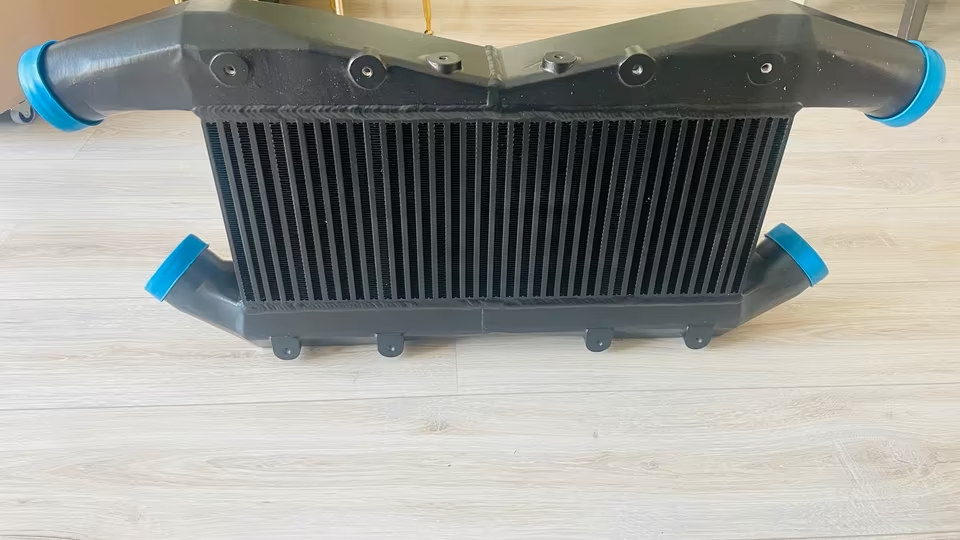
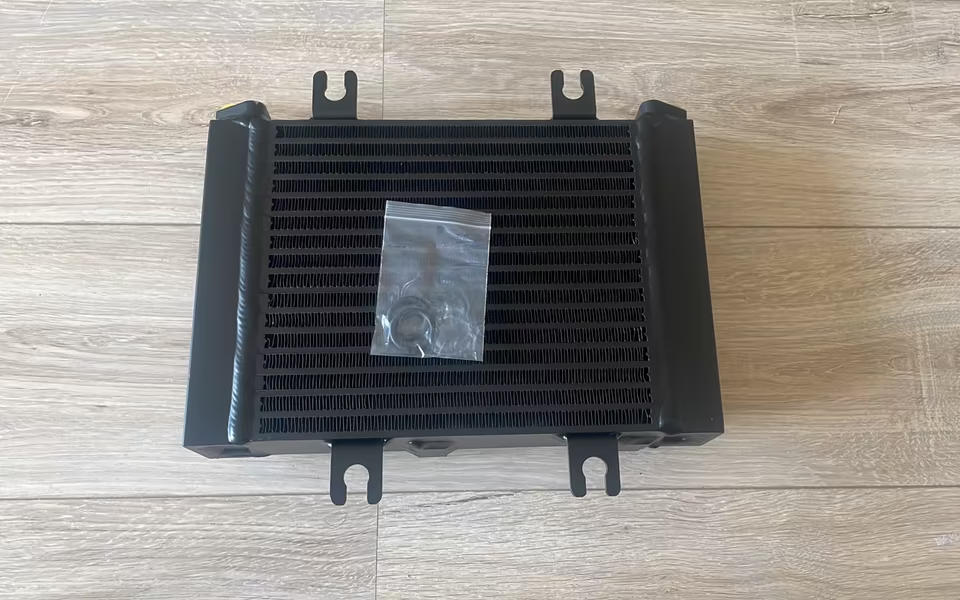

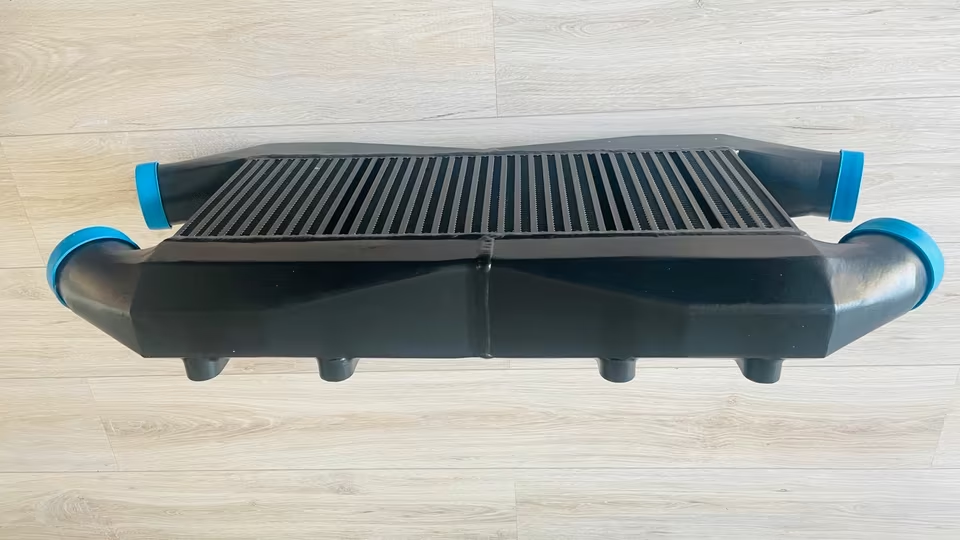
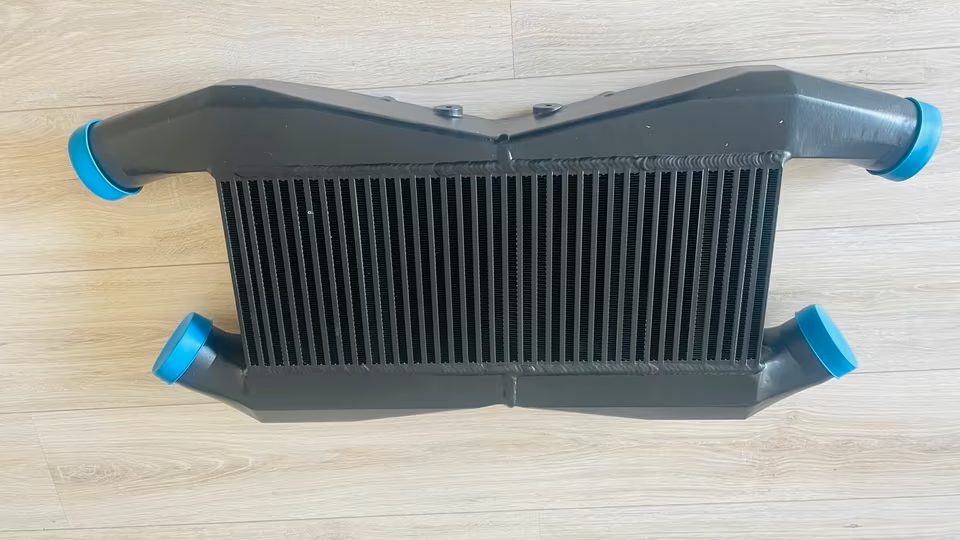
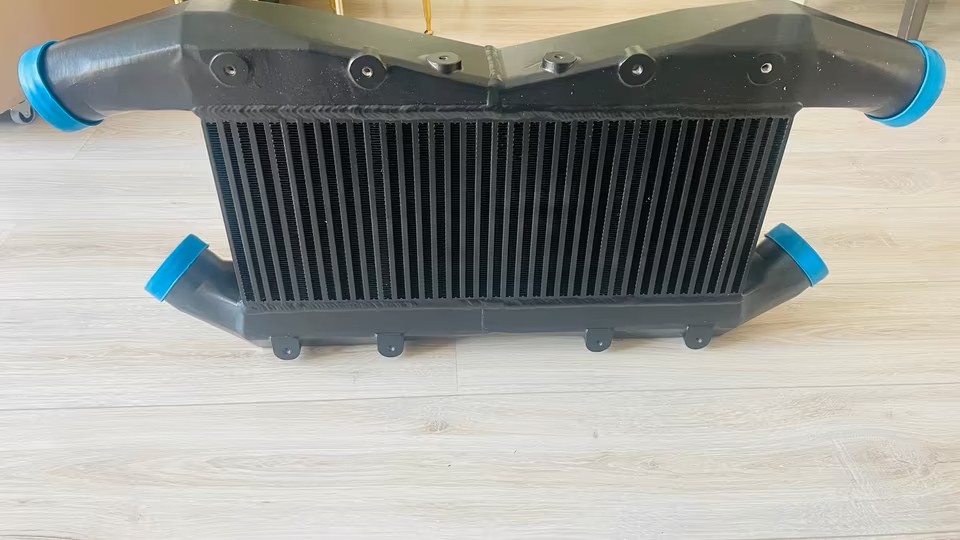


Nissan GT-R R35 GTR intercooler intercooler oil cooler OilCooler
inventory at Buy Mustang parts Ltd, the Intercooler and Oil Cooler systems for the Nissan GT-R R35 are the most critical thermal management upgrades. In 2026, as these cars are pushed to higher horsepower levels ($700$–$1,200$+ hp), heat soak becomes the primary enemy of performance.
1. R35 Intercooler Systems: Front Mount (FMIC)
The stock twin-intercooler setup is adequate for stock boost, but for anything over Stage 2 ($600$ hp), a high-capacity single-core or upgraded twin-core system is required.
| Brand | Type | Est. Price (USD) | Key Feature |
| HKS R-Type | Twin-Core | $2,800 – $3,200 | Lightweight ($8.0$ kg); includes carbon fiber air guides. |
| AMS Alpha | Race Series | $4,500 – $4,900 | Massive vertical flow; rated for $1,500$+ hp. |
| ETS (Extreme Turbo) | Street / Race | $1,900 – $2,600 | Direct bolt-on; available in $3.0$” to $4.0$” thicknesses. |
-
Strategic Tip: For your luxury clients, stock the HKS R-Type. It is the only kit that includes Matte Twill Carbon Fiber air ducts, which look incredible behind the grill and significantly improve cooling efficiency by ramming air through the core.
2. Oil Cooling: Engine & Transmission (DCT)
The R35 is notorious for transmission overheating during track use. A standalone DCT Cooler is often the first modification a serious GT-R owner makes.
-
Engine Oil Cooler: Upgrades like the AMS Performance or Cicio units replace the factory tube-and-fin core with a $61$ mm thick bar-and-plate design.
-
Selling Point: “Drop-in fit that uses OEM brackets but offers $20\%$–$30\%$ better cooling.”
-
-
Transmission (DCT) Cooler: These are typically mounted in the front left fender (opposite the engine oil cooler).
-
The HKS DCT Kit: Includes a dedicated shroud and a specialized aluminum washer tank because the cooler takes up the space of the factory reservoir.
-
3. Strategic Advice for Buy Mustang parts Ltd
-
The “Limp Mode” Solution: Market these cooling parts as the “Limp Mode Cure.” Owners hate when their car cuts power after two laps at the track. Explain that at $140$°C ($284$°F), the GT-R enters protection mode; these coolers keep temps consistently below $110$°C.
-
The “Clean Out” Warning: Never sell used oil coolers from a car that had an engine failure. Shavings get trapped in the tiny “turbulator” fins and will destroy the next engine they are installed on. For your reputation, only sell Brand New or Ultrasonically Cleaned cores.
-
The Bundle: Create a “Track-Ready Cooling Package” that includes the Intercooler, Engine Oil Cooler, and DCT Cooler for a package price of around $6,500.
4. Inspection & Quality Control
-
Pressure Testing: All intercoolers should be pressure tested to $50$ psi. A pinhole leak in an intercooler causes a “boost leak,” making the turbos overspin and potentially fail.
-
Fin Density: Look for high-density “offset and staggered” fins. Cheap intercoolers have straight-through fins that don’t scrub enough heat from the air.
-
End Tank Quality: Ensure the end tanks are Cast Aluminum and TIG-welded. Avoid “Sheet Metal” end tanks as they can balloon or crack under high boost pressures ($30$+ psi).
5. Logistics & Shipping
-
Intercooler Crating: Intercooler fins are as soft as aluminum foil.
-
Protocol: Cover the core faces with rigid cardboard sheets before bubble-wrapping. One stray thumb-press can ruin the “Brand New” look.
-
-
Oil Cooler Fittings: Ensure the -10AN or -12AN fittings are capped with plastic plugs to prevent dust or moisture from entering the core during storage.
Reviews
There are no reviews yet.